
Leptaspis urceolata
Leptaspis urceolata
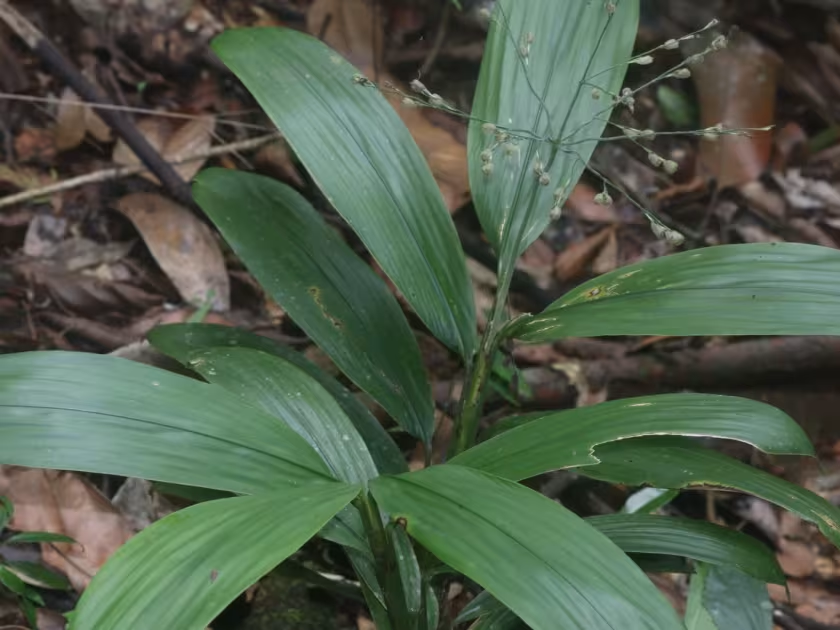
Description
Growing requirements
Leptaspis urceolata is a distinct perennial grass species belonging to the Poaceae family. It is primarily native to the tropical rainforest regions, where it occupies the understory layer, thriving in shaded and protected microclimates.
The plant is characterized by its significant shade tolerance, a trait that allows it to persist where many other grass species would fail. Its physiological structure is finely tuned to optimize photosynthesis under low light intensities found in dense jungle settings.
Requirements for successful cultivation include consistent moisture levels. The substrate must remain damp but well-drained, as the root system is highly sensitive to waterlogging, which often leads to rapid decay in containerized or confined environments.
Soil composition is critical for this species. It prefers a nutrient-rich, acidic to neutral growing medium that mimics the composition of forest leaf litter. Incorporating organic matter such as peat or pine bark helps maintain the necessary soil structure and acidity.
Climate control is essential for Leptaspis urceolata, as it demands stable tropical temperatures. Exposure to direct sunlight or dry, chilling winds can be fatal to the delicate leaves, making greenhouse or indoor environments the most suitable for maintaining this botanical specimen.