
Lepionurus sylvestris
Lepionurus sylvestris
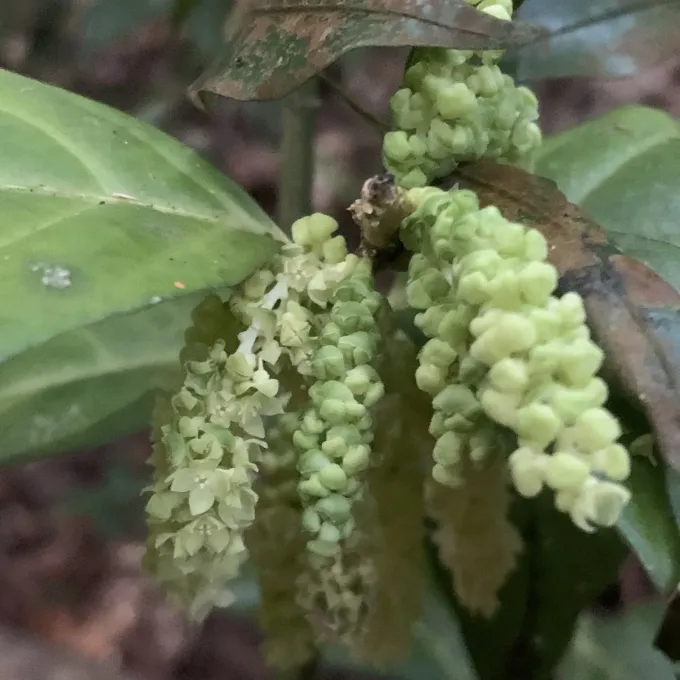
Description
Growing requirements
Lepionurus sylvestris belongs to the Opiliaceae family and is a woody plant natively occurring in the tropical rainforests of Southeast Asia, where it functions as a typical component of the forest understory.
The species requires a tropical climate characterized by consistently warm temperatures and high humidity throughout the year, as it is highly sensitive to cold stress and frost exposure.
Optimal soil conditions include well-drained, nutrient-rich soil with a slightly acidic to neutral pH, which supports the healthy development of its root system and general vegetative vigor.
Being a shade-tolerant species, this plant is well-adapted to low-light intensity environments, making it an excellent candidate for forest agroforestry systems under a partial canopy.
Its botanical structure includes distinct lanceolate leaves and inflorescences that produce fleshy, edible berries, which serve as a food source for various local fauna in its natural habitat.
Harvesting
The harvesting of Lepionurus sylvestris is primarily based on foraging in the wild, where local populations collect the ripe berries for traditional nutritional and therapeutic purposes.
Harvest timing depends on the seasonal maturation of fruits, which requires careful monitoring to ensure the berries are picked at their peak nutritional density and flavor profile.
Although it is not currently a widespread commercial commodity, the potential for domestication is of interest to researchers focusing on the preservation and utilization of native tropical crops.
Post-harvest handling is critical for maintaining quality, as the berries are delicate and prone to rapid deterioration if not processed or consumed shortly after collection.
Sustainable harvesting practices are essential to ensure the longevity of wild populations, as the plant serves as a vital component of the local ecosystem biodiversity.