
Leontice leontopetalum
Leontice leontopetalum
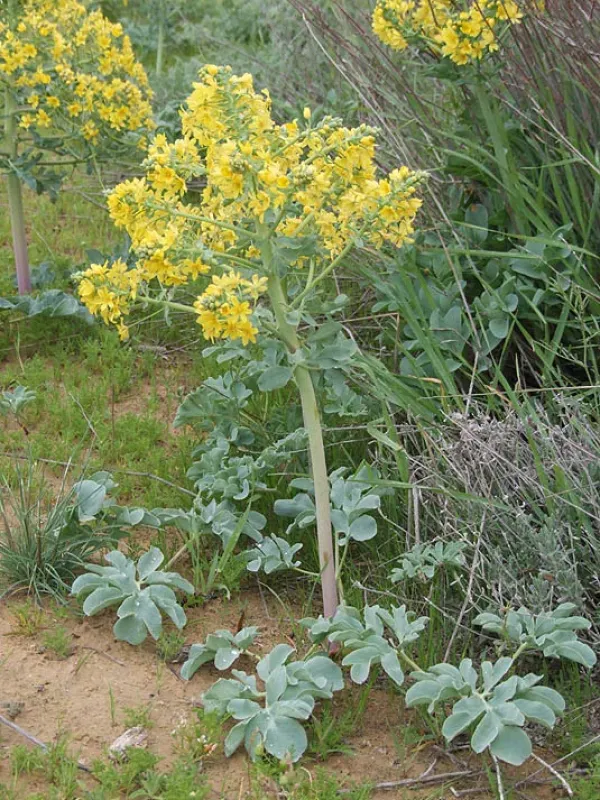
Description
Sowing dates
Leontice leontopetalum is a classic ephemeral plant with a very short growing season. Propagation is typically achieved through seeds sown during the autumn months.
Seeds require a period of cold stratification to break dormancy. Sowing should be done in open ground or trays, placing seeds at a depth of about 3–5 centimeters.
The seeds germinate early in the spring as soon as temperatures rise above freezing. The plants must emerge quickly to utilize the available soil moisture before the dry season begins.
Vegetative propagation is done by separating tuber offsets during the summer dormancy period. This must be handled carefully to avoid damaging the dormant bud.
Patience is essential, as the growth rate is slow. It can take several years for a plant grown from seed to reach the reproductive stage and produce flowers.
Growing requirements
This species demands full sun exposure to flourish. Light is the most important factor for the rapid accumulation of nutrients in its large tubers.
The soil must be light, well-draining, and sandy or rocky in texture. Compact or clay soils are unsuitable and will almost inevitably lead to root rot.
The plant thrives in alkaline or neutral soil conditions. It is highly adapted to arid climates where seasonal rainfall is concentrated in the early spring.
Good ventilation is necessary to prevent fungal outbreaks during the short, active growth phase. Avoiding crowded plantings helps ensure airflow around the foliage.
Temperature management is largely passive, as the plant naturally evades the summer heat by entering a state of dormancy, shedding its leaves and stems.
Main diseases and pests
The greatest threat to this plant is moisture-induced root rot. If the soil remains saturated for too long, the tuber will quickly succumb to decay.
Below-ground pests such as wireworms are significant threats. They consume the tuberous roots, often causing the plant to wither and collapse before it can bloom.
Fungal leaf spots can occur if the spring is unusually humid and stagnant. Keeping the immediate area clear of dense weed cover helps mitigate this risk.
Improper fertilization, particularly excessive nitrogen, promotes lush foliage at the expense of root health, making the plant more vulnerable to common pathogens.
Monitoring for pest activity should begin immediately upon the appearance of the first shoots in the spring to prevent significant damage to the tubers.
Harvesting
Seed harvest should occur precisely when the capsules turn brown but before they split open. This requires daily monitoring during the maturation phase.
Harvesting the tubers for medicinal or collection purposes must be done after the leaves have completely turned yellow and died back in the summer.
Once harvested, tubers should be cleaned of soil and dried in a well-ventilated, shady area. High humidity during storage will cause the tubers to sprout or rot.
Tubers are best stored in dry, breathable material such as peat or sand. This mimics the natural soil environment while preventing excessive moisture buildup.
Due to its slow growth, large-scale harvesting of wild populations is unsustainable, and cultivation should focus on controlled environments with minimal disturbance.