
Lejeunea cavifolia
Lejeunea cavifolia
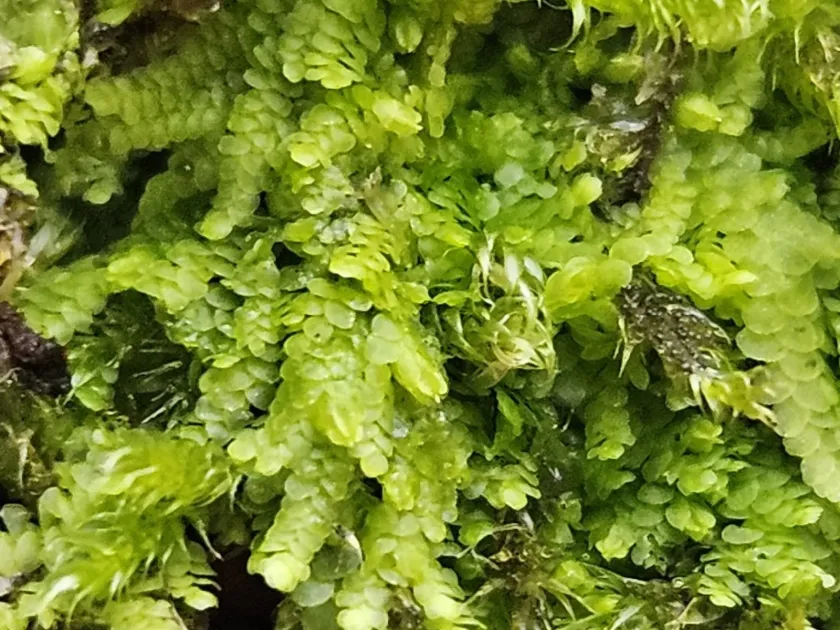
Description
Growing requirements
Lejeunea cavifolia is a representative of the Lejeuneaceae family, classified as a liverwort. It is a small plant that thrives in temperate climate zones, often acting as a bioindicator of healthy forest environments.
While not a conventional agricultural crop, it holds significant biological interest. It does not provide any economic yield, but its presence signals a well-balanced local microclimate and high environmental air quality.
The plant is typically found growing on bark of deciduous trees, limestone rocks, and shaded, moist soil. It prefers habitats that remain sheltered from direct sunlight and excessive wind exposure throughout the year.
Essential conditions for growth involve high atmospheric moisture and a stable temperature regime. It is highly vulnerable to desiccation and the removal of forest canopy, which directly alters the humidity levels it relies upon.
Botanically, it forms small, thin, prostrate patches that adhere to the substrate. Its structure is specialized for efficient water absorption from the surrounding air, which allows it to colonize narrow environmental niches effectively.