
Tidy tips
Layia platyglossa (Fisch. & C. A. Mey.) A. Gray
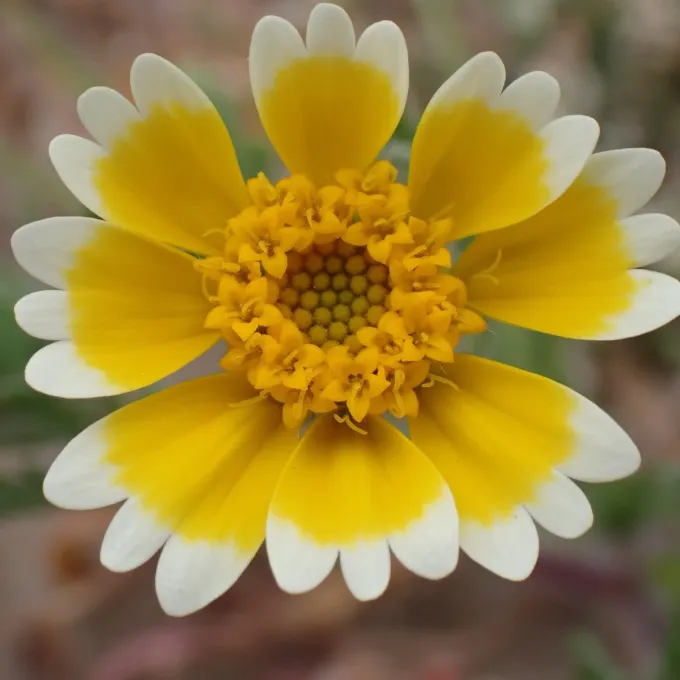
Description
Sowing dates
Layia platyglossa, commonly known as Tidy tips, is an annual plant belonging to the Asteraceae family. It is typically sown directly into the ground in early spring after the risk of frost has passed.
For earlier blooms, seeds can be started indoors in seed trays during late winter. Since the seeds require light for germination, they should be covered only lightly with a thin layer of soil.
The planting distance should be approximately 20–30 cm between individual plants to ensure adequate spacing, which prevents overcrowding and helps maintain plant health.
Optimal germination occurs in well-prepared, loose soil. Seedlings generally emerge within 10–14 days under warm and sunny conditions, provided the moisture is consistent.
Successive sowing every few weeks can extend the blooming season, keeping the garden colorful from early summer until the first frosts of autumn.
Growing requirements
Native to the western parts of North America, this plant is perfectly adapted to open, sun-drenched environments. It requires full sun to thrive and produce its signature yellow-tipped white petals.
The plant grows best in well-draining, light, or sandy soil. It is intolerant of waterlogged soil, which can quickly lead to root decay in poorly drained garden beds.
Once established, Tidy tips are remarkably drought-tolerant, though supplemental watering during intense dry spells will encourage a more vibrant and long-lasting display.
The species prefers a climate with clear, sunny days. In regions with high summer humidity, special attention must be paid to soil drainage and air movement around the plants.
Fertilization should be kept minimal. Excessive soil richness often leads to weak stems and reduced flower production, as the plant prefers leaner, meadow-like conditions.
Main diseases and pests
The primary threats to this species include fungal infections such as powdery mildew, especially if plants are grown in areas with poor airflow or excessive humidity.
Root rot is a significant risk in heavy, wet soils. Selecting a site with excellent drainage and avoiding deep mulching around the crown can help mitigate these issues.
Aphids are the most common insect pests, often gathering on tender new growth. Infestations should be monitored and managed early to prevent damage to the flower buds.
Spider mites can occasionally cause issues during prolonged hot and dry conditions, leading to stippled or yellowing leaves if left uncontrolled.
General garden hygiene, such as removing debris and ensuring adequate spacing, remains the most effective strategy for maintaining a healthy patch of Tidy tips.
Harvesting
Tidy tips are highly valued in landscape design for their cheerful, daisy-like flowers and are excellent for filling gaps in meadow gardens or colorful annual beds.
The primary harvest involves collecting mature seeds at the end of the season. The seed heads should be left to dry on the plant until they turn brown and brittle.
Once harvested, the seeds should be winnowed to remove chaff and stored in a cool, dry place. Proper storage in paper envelopes ensures high viability for the next season.
While the flowers are attractive, they are not typically used as cut flowers due to their fragile nature and shorter vase life compared to more robust species.
Beyond aesthetics, the plant plays a beneficial role in the ecosystem by acting as a valuable nectar source for bees, butterflies, and other essential pollinators.