
Laureliopsis philippiana
Laureliopsis philippiana
Description
Growing requirements
Laureliopsis philippiana, commonly known as tepa, belongs to the Atherospermataceae family. It is an evergreen hardwood tree native to the Valdivian temperate rainforests of Chile and adjacent parts of Argentina.
The species requires deep, fertile, and well-drained soils to thrive. It is highly dependent on high atmospheric humidity and is typically found in environments with significant annual rainfall, making it unsuitable for arid or semi-arid climates.
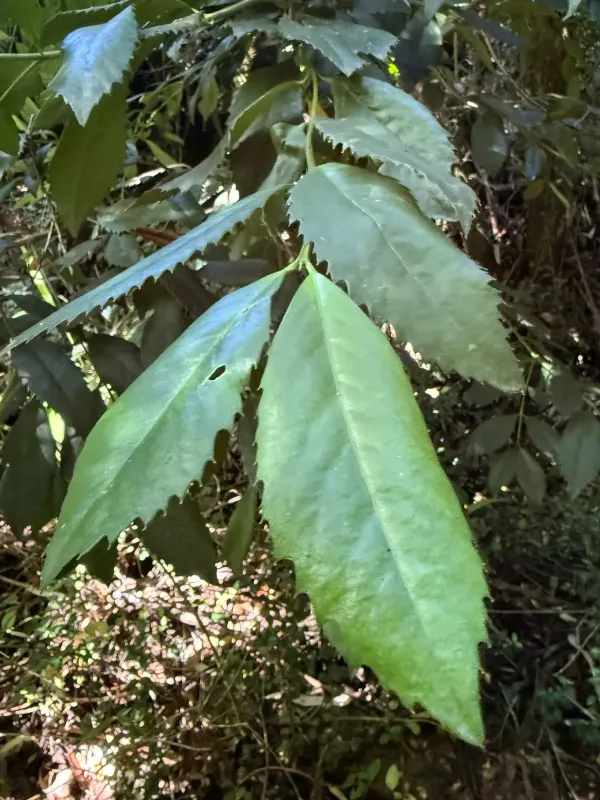
Botanically, it is characterized by its serrated, leathery leaves and monoecious flowering structure. The tree can reach substantial heights in mature forest stands, competing effectively for sunlight within the complex canopy of its native ecosystem.
In terms of silviculture, the tree is considered a shade-tolerant species during its juvenile phase, which allows it to recruit under established forest canopies. It shows moderate resistance to cold but is vulnerable to extreme drought conditions.
The wood of Laureliopsis philippiana is highly regarded for its physical properties, including excellent workability and aesthetic grain. It is primarily harvested for the production of high-quality furniture, flooring, and decorative interior woodwork.