
Beach peavine
Lathyrus littoralis
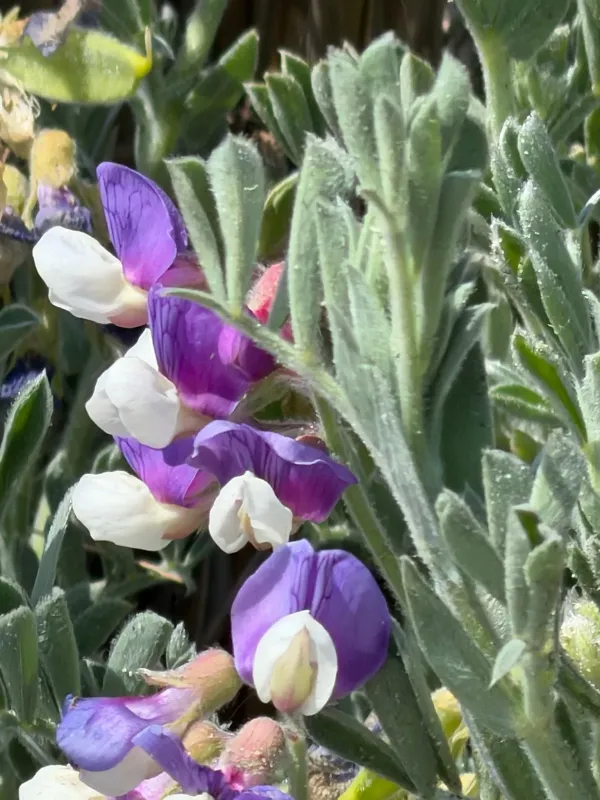
Description
Sowing dates
Sowing should be carried out in early spring when moisture levels in the sand are optimal to support the germination process.
Seed pretreatment, such as mechanical scarification, is highly recommended due to the hard seed coat, which often results in uneven germination if left untreated.
Seeds should be sown at a depth of approximately 2 to 3 centimeters, ensuring that they are covered sufficiently to prevent desiccation by sun and wind.
Establishing an effective cover requires precision, as the seedlings are sensitive to sand abrasion and competing vegetation during the first few weeks.
In large-scale restoration projects, direct seeding is supplemented with the use of protective netting or organic mulch to hold the sand in place until the plants are established.
Growing requirements
Beach peavine (Lathyrus littoralis) is a perennial leguminous plant known for its remarkable ability to colonize and stabilize coastal sand dunes. It belongs to the Fabaceae family.
The plant features a deep and expansive root system, which is essential for survival in environments characterized by nutrient-poor, unstable, and well-drained sandy substrates.
It thrives in open, sunny locations with high salt tolerance. The species is evolutionarily adapted to withstand the harsh conditions of maritime winds and periodic sand burial.
Climatically, Lathyrus littoralis prefers regions with oceanic influences where temperature fluctuations are moderate, preventing severe soil freezing that could damage its rhizomes.
Besides its ecological role in preventing soil erosion, Beach peavine acts as a pioneer species that prepares the soil for subsequent colonization by other plant communities.
Main diseases and pests
Fungal pathogens, particularly those causing leaf spot or root rot, represent the primary disease threat, especially during seasons with unusually high humidity.
Insect pests such as aphids and various weevils can significantly impact the vegetative mass, leading to stunted growth and reduced vigor of the legume stand.
Severe competition from invasive grasses can effectively choke out Beach peavine, necessitating active weed management in the early establishment phase.
Extreme weather events, such as winter storms causing excessive dune erosion, can physically uproot younger plants before their root systems reach deep sand layers.
To mitigate these threats, it is advised to source high-quality, disease-free seed and implement periodic monitoring of the stand for early signs of pest infestation.