
Lasimorpha senegalensis
Lasimorpha senegalensis
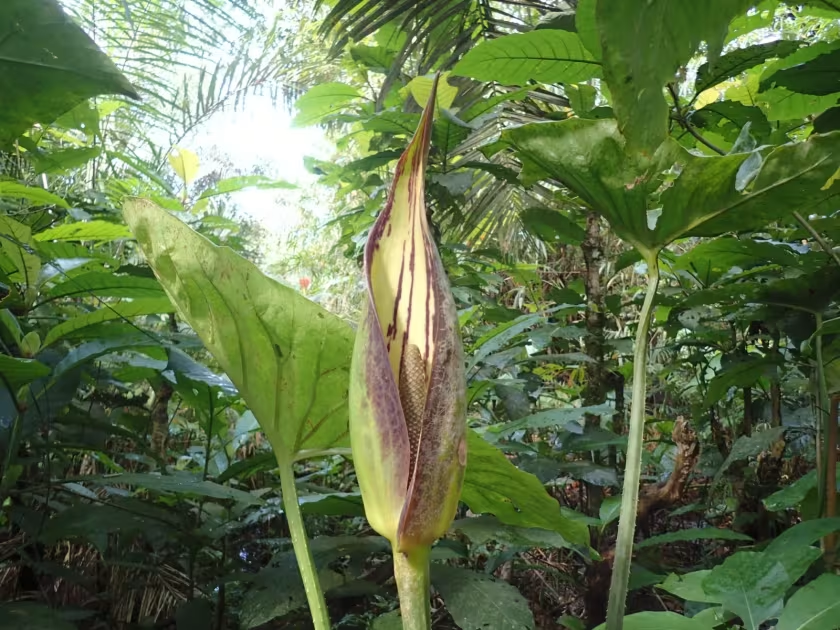
Description
Sowing dates
Sowing of Lasimorpha senegalensis in its native range is typically aligned with the onset of the rainy season, ensuring the necessary moisture for germination.
Before planting, seeds often require scarification to break dormancy and ensure a uniform germination rate across the planting bed.
The optimal temperature for sowing ranges between 22 and 28 degrees Celsius, which supports the rapid development of the seedling's root system.
Seeds should be sown in a well-draining, nutrient-rich substrate at a depth of approximately 2-3 centimeters to protect them from environmental fluctuations.
Consistent moisture levels must be maintained after sowing, though caution should be exercised to prevent the substrate from becoming waterlogged.
Growing requirements
This species, belonging to the Araceae family, thrives in tropical climates characterized by high humidity and moderate to warm temperatures throughout the year.
The ideal soil profile includes organic-rich, acidic to neutral soil that offers excellent drainage capabilities to avoid root rot and associated issues.
Lasimorpha senegalensis requires partial shade or diffused light, as direct exposure to harsh tropical sun can cause severe leaf scorch and dehydration.
A minimum humidity level of 70-80 percent is essential for the healthy development of its foliage and structural integrity of the plant.
Consistent watering schedules should be implemented, ensuring the soil remains moist but not saturated, which mimics the natural forest floor conditions.
Yield
The yield of Lasimorpha senegalensis is primarily evaluated based on the biomass production, which is utilized in local traditional and decorative practices.
Under optimal growing conditions with sufficient nutrient availability, the plant can produce significant vegetative growth within a single growing cycle.
Harvesting strategies vary depending on the intended use, with careful attention paid to preserving the underground storage organs for future regrowth.
Studies regarding the maximum yield potential are ongoing, as the crop remains largely underutilized in large-scale modern agriculture.
Regular monitoring of growth rates and environmental responses is crucial for optimizing yield in controlled environments such as greenhouses.
Main diseases and pests
The plant is susceptible to various fungal pathogens that thrive in high humidity, often resulting in leaf spot diseases or stem rot.
Common pests include spider mites and mealybugs, which tend to infest the undersides of leaves and extract essential plant sap, weakening the host.
Root rot is the most significant threat to Lasimorpha senegalensis, usually caused by poor drainage or overwatering in confined pots or heavy soils.
Integrated pest management, including the use of horticultural oils or biological controls, is recommended to mitigate the impact of common garden pests.
Ensuring proper air circulation around the plants can significantly reduce the incidence of both fungal infections and certain types of insect infestations.