
Laser trilobum
Laser trilobum (L.) Borkh.
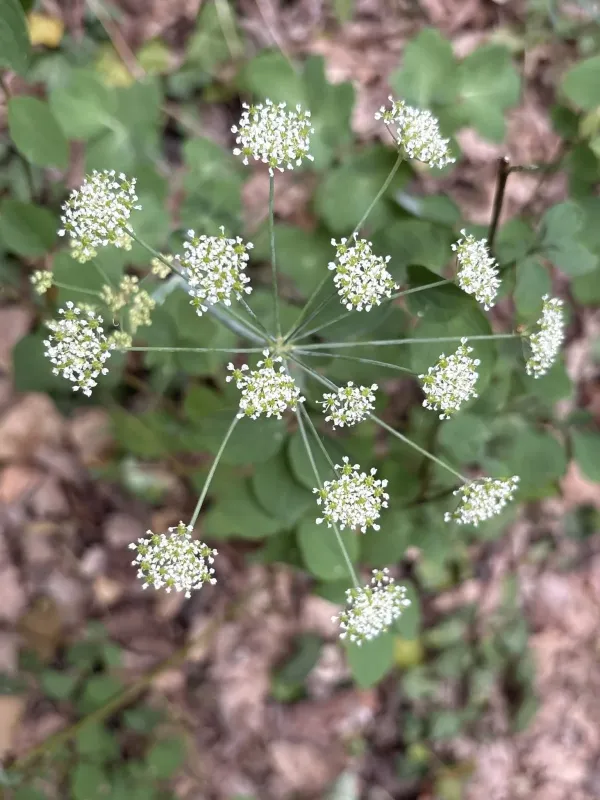
Description
Sowing dates
Sowing of Laser trilobum seeds is mainly carried out before winter or in early spring when the soil retains a sufficient level of moisture. For successful germination, the seeds require a stratification period, which is why autumn sowing is considered most effective for obtaining uniform seedlings.
The planting depth is usually 1.5–2 centimeters. When sowing in rows, it is recommended to maintain a spacing of about 45–60 centimeters between rows, which ensures optimal growing area for the development of leaf rosettes and subsequent flower stalks.
Before sowing, the soil must be thoroughly prepared: it requires deep loosening and cleaning from perennial weeds, as the crop grows slowly in the first year and can be easily suppressed by competitors.
The seeding rate is calculated based on the seed germination percentage and the desired plant density. On average, 4 to 6 kilograms of seed material are required per hectare, provided the seeds have high purity.
After sowing, it is recommended to slightly roll the area to ensure better contact between seeds and soil. In case of spring sowing, providing regular watering until the first true leaves appear is essential.
Growing requirements
Laser trilobum belongs to the Apiaceae family and prefers well-lit areas, although it can tolerate light shading during the hottest part of the day. The plant is quite demanding regarding soil fertility and prefers humus-rich, loamy soils with a neutral or slightly alkaline reaction.
The crop has moderate drought resistance, but for high-quality vegetative mass and full seed yield, stable moisture is required during the first half of the vegetation period.
The optimal temperature range for active growth is 18–22 degrees Celsius. As a perennial plant, it is capable of enduring winter temperature drops characteristic of temperate latitudes, provided there is a sufficient snow cover.
For the normal development of the Laser trilobum root system, it is necessary to avoid areas with high groundwater levels and stagnant moisture, which can lead to root rot during the spring snowmelt.
Agronomic care includes regular cultivation of rows, which promotes soil aeration and moisture retention, as well as timely weeding during the early stages of plant development.
Yield
The commercial use of Laser trilobum is mainly aimed at obtaining essential oil raw materials and seeds, which are used in pharmaceuticals and traditional medicine due to their content of biologically active compounds.
The yield of green mass directly depends on the level of agronomic management and mineral nutrition. Applying moderate doses of nitrogen fertilizers at the start of spring regrowth can significantly increase the output of the plant's above-ground parts.
Seed harvesting is carried out as they ripen, when the umbels acquire a characteristic brownish hue. It is important to harvest on time to prevent seed shattering, which is a biological feature of this Apiaceae species.
In commercial operations, seed yield can reach 5 to 8 centners per hectare, provided all agronomic regulations are followed and protective measures against pests are implemented.
The efficacy of the crop as an industrial plant is largely determined by the content of specific terpenoids in the roots and seeds, making it a promising object for breeding work aimed at improving essential oil quality.
Main diseases and pests
Laser trilobum is susceptible to specific diseases of Apiaceae crops, among which the most dangerous are fungal infections such as powdery mildew and leaf septoria, especially in years with high humidity.
Among pests, the carrot fly and aphids cause the most damage, as they attack the root system and young shoots, causing plant weakening and a decrease in overall harvest quality.
To prevent the spread of infections, crop rotation is recommended: Laser trilobum should not be planted back on the same plot for at least 4–5 years to avoid pathogen accumulation in the soil.
Upon detection of initial signs of pest or disease damage, permitted insecticides and fungicides are applied; however, it is important to consider pre-harvest intervals, especially if the raw material is intended for pharmacological use.
- Adherence to phytosanitary regulations
- Usage of high-quality treated seed material
- Timely removal of weeds — disease reservoirs
Harvesting
Harvesting of the above-ground part (the herb) is carried out during the mass flowering phase, when the concentration of useful components in the plant reaches its maximum. Mowing is performed at a height of 10–15 centimeters from the soil level.
After mowing, the raw material must be dried immediately in the shade under a canopy or in special dryers at temperatures not exceeding 40 degrees, which helps preserve essential oils and other volatile compounds.
Laser trilobum roots are harvested in autumn, during the period of above-ground part dieback, when all nutrients have translocated to the plant's underground organs. The roots are thoroughly washed, cleaned of soil, and dried in dryers.
The technology for seed harvesting requires the use of grain combines with appropriate adjustments to the cutting mechanism and cleaning system to minimize losses during threshing.
Properly dried raw materials should have a natural color and a specific aroma characteristic of this plant and should be stored in dry, well-ventilated rooms in paper or fabric containers.