
Bluebur
Lappula squarrosa (Retz.) Dumort.
Description
Growing requirements
Bluebur, known scientifically as Lappula squarrosa, is a member of the Boraginaceae family. It is widely recognized in agriculture not as a crop, but as an invasive weed species that competes with cereal and broadleaf crops for essential environmental resources.
The plant thrives in a variety of soil conditions, showing a preference for disturbed, well-drained, and nutrient-rich soils. Its resilience is attributed to its high adaptive capacity, allowing it to colonize fields rapidly, especially where soil structure has been compromised by intensive tillage.
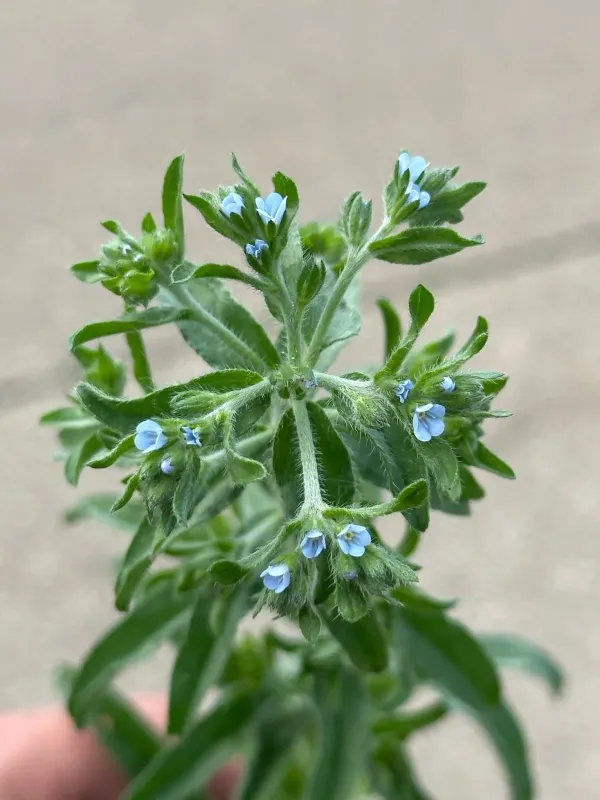
From a botanical standpoint, Bluebur is distinguished by its small, blue-violet flowers and fruit pods covered in hooked prickles. These hooks are specifically adapted for epizoochory, meaning the seeds attach to animal fur or mechanical equipment, facilitating spread across farm landscapes.
Agronomic management of this species involves integrated weed control strategies. Successful eradication or suppression depends on disrupting the seed bank through consistent cultivation practices and the implementation of crop rotations that favor competitive cash crops.
Although it offers no direct economic value to agricultural systems, the plant serves as a nectar source for pollinators in natural ecosystems. In an agronomic context, the primary focus is on limiting its density to prevent yield reduction and long-term soil seed bank accumulation.
Main diseases and pests
Bluebur competes aggressively for water and nitrogen in the early stages of crop development, which can lead to significant biomass reduction in main crops. Its ability to grow in clusters makes it a persistent competitor in row crop systems.
The species can harbor various phytopathogens that also affect domestic crops. By acting as an alternative host for certain fungi and insects, it increases the overall pest pressure within the field, necessitating more frequent and rigorous monitoring.
Pests that inhabit these weed colonies often utilize the plant as a refugium during unfavorable weather conditions. Controlling Bluebur on field borders is a key strategy for reducing the migration of insects into prime agricultural produce areas.
Herbicidal control is the most common approach for large-scale infestations. However, it must be timed correctly, targeting the rosette stage before the plant develops its defensive, hooked-seed structures, which complicate manual or mechanical removal.
To ensure long-term field health, farmers should adopt a combination of chemical and cultural control methods. Ensuring the cleanliness of agricultural machinery and using high-quality, certified seeds are crucial preventative measures against the spread of this tenacious species.