
Muehlenbeckia complexa
Muehlenbeckia complexa (A. Cunn.) Meisn.
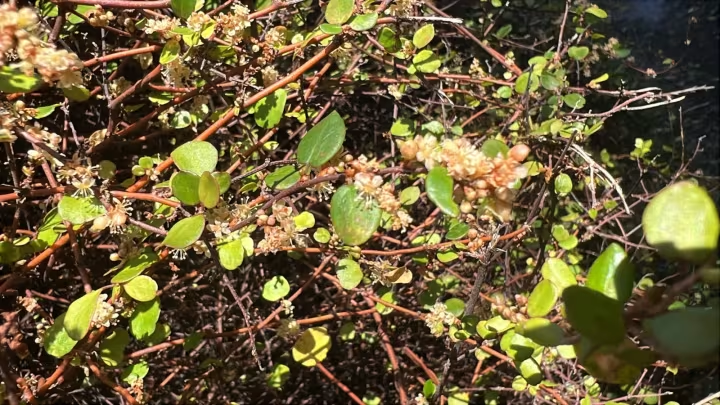
Description
Growing requirements
Muehlenbeckia complexa, widely known as wire vine or necklace vine, is a perennial semi-shrub belonging to the Polygonaceae family. Native to New Zealand, it is recognized for its dense, tangled habit and dark, wiry stems that can reach significant lengths in favorable conditions.
The plant features small, rounded, dark green leaves that create a lush, textured appearance. Its growth pattern makes it an excellent choice for ground coverage, as it roots wherever stems make contact with the soil, effectively stabilizing slopes and preventing erosion.
To achieve optimal growth, this crop requires well-drained, fertile soil with a neutral pH. It thrives in locations that provide plenty of bright, indirect sunlight, though it can tolerate partial shade if the climate is sufficiently warm and humid.
Regarding climatic needs, Muehlenbeckia prefers mild temperatures. While it is hardy in temperate zones, it benefits from protection against heavy frosts. In colder climates, it is often treated as a seasonal plant or moved to a greenhouse during the winter months.
The practical application of this plant is primarily decorative. It is highly valued in modern landscape design for creating living fences, topiary frameworks, and cascading displays in hanging baskets, thanks to its exceptional tolerance for frequent pruning and shaping.
Main diseases and pests
Root rot is the most common threat to Muehlenbeckia complexa, typically caused by overwatering or poor soil drainage. Keeping the root zone waterlogged for extended periods is detrimental to the plant's long-term health and vitality.
Spider mites are the primary pest concern, especially when the plant is grown indoors or in areas with low humidity. These pests feed on the cell sap, causing the foliage to lose its healthy green color and eventually wither if not treated properly.
Mealybugs are another common adversary, identifying themselves by the cottony white substances they leave in leaf axils and on stems. They extract plant juices, which can lead to stunted growth and severe aesthetic damage to the dense foliage.
Aphids can occasionally infest new, tender growth during the spring season. A simple approach to control involves physical removal or the application of appropriate biological soaps to keep the population from spreading across the entire plant.
To minimize disease and pest pressure, it is essential to ensure adequate airflow within the foliage. Proper pruning not only shapes the plant but also removes dead or decaying material that could harbor fungal spores and harmful insect colonies.