
Ribbon Bush
Muehlenbeckia platyclada (F. Muell.) Meisn.
Description
Growing requirements
The Ribbon Bush (Muehlenbeckia platyclada), often known as the centipede plant, belongs to the Polygonaceae family. Originating from the Solomon Islands and Papua New Guinea, this unique species has adapted to humid tropical environments.
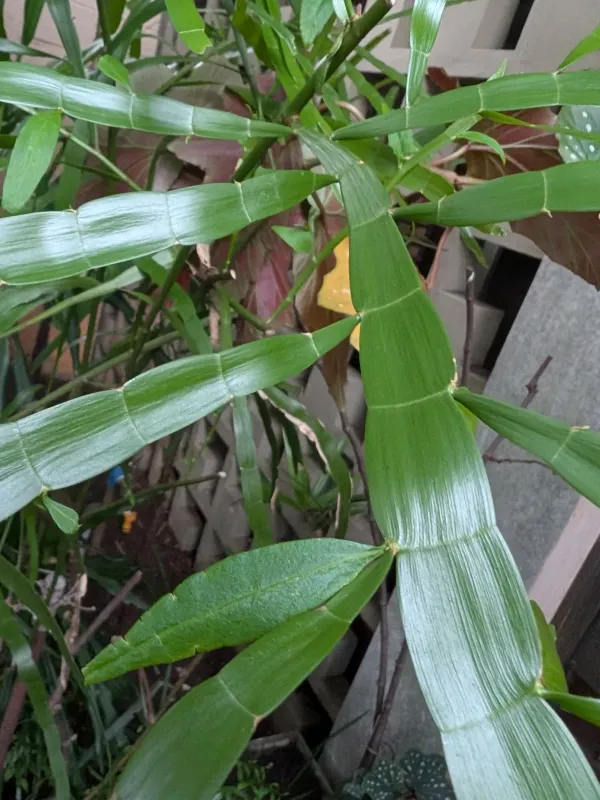
Botanically, the plant is distinguished by its flattened, leafless, ribbon-like stems that act as photosynthetic organs. This xerophytic adaptation allows the plant to thrive in regions where light availability is high but water availability may fluctuate.
Cultivation requires bright, indirect sunlight to maintain the integrity of the stem structure. Excessive exposure to intense sunlight can lead to scorch, while insufficient light causes the stems to lose their distinctive shape and vigor.
The soil must be porous and well-draining, typically consisting of a mix of peat moss, perlite, and coarse sand. A pH level ranging from slightly acidic to neutral is ideal for supporting healthy root development and nutrient uptake.
Watering practices should follow a cycle of saturation and partial drying. It is crucial to avoid constant moisture around the roots, as this significantly increases the risk of stem decay and poor plant performance.
Main diseases and pests
The Ribbon Bush is susceptible to common greenhouse pests, including scale insects and spider mites. These pests thrive in indoor conditions, particularly where air circulation is restricted.
Fungal pathogens pose a significant threat when soil drainage is inadequate. Root rot and stem blight are common conditions resulting from waterlogged conditions and lack of proper aeration.
Management of these threats involves both mechanical and chemical control. Regular monitoring for webbing or sap-sucking insects is essential for early intervention using horticultural soaps or systemic pesticides.
To prevent fungal development, it is recommended to manage irrigation schedules carefully and use appropriate fungicides if symptoms of decay emerge near the base of the plant.
Sanitation practices, such as pruning dead or damaged stems and removing fallen debris from the surface of the growing medium, are effective in reducing the pressure of infectious diseases.