
Lachenalia aloides
Lachenalia aloides (L. f.) Pers. ex Engl.
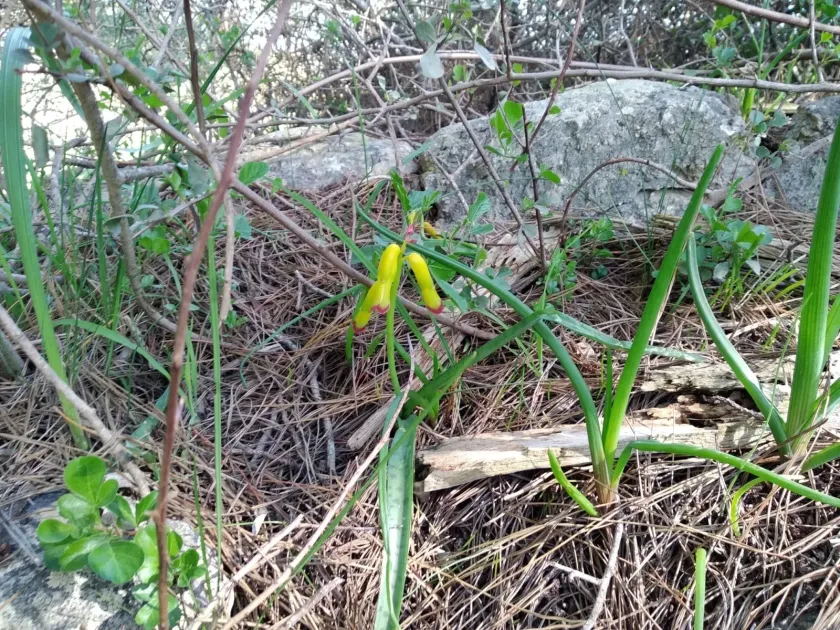
Description
Sowing dates
Lachenalia aloides is primarily propagated by separating the offsets (bulblets) that develop around the main bulb. This procedure should be performed during the summer dormancy period when the plant has completely finished its growth cycle and the foliage has withered.
The bulbs are typically planted in early autumn. Using a well-draining potting mix is essential to ensure that the roots establish properly before the peak of the winter growing season. The planting depth should be approximately 5-8 centimeters.
Seed propagation is also possible but is primarily used for breeding purposes. Seeds are sown in a sandy, moist medium and require cool temperatures to germinate, reflecting the natural cycle of the Cape region of South Africa.
Containers used for planting should be wide and shallow, as Lachenalia tends to grow in clusters. Ensuring adequate space in the pot promotes better aeration for the bulbous root systems.
Once planted, the bulbs should be kept in a cool, bright location. Watering should start sparingly, gradually increasing as the first green shoots appear above the soil surface, indicating the start of the active growth phase.
Growing requirements
Lachenalia aloides is a bulbous perennial member of the Asparagaceae family. It is native to the Cape Province in South Africa, specifically adapted to winter rainfall and summer drought conditions.
The plant requires a cool growing environment, with ideal temperatures ranging between 10 and 15 degrees Celsius. Exposure to high temperatures during the growing season can cause the plant to go dormant prematurely or fail to flower.
Light requirements are high, but the plant needs protection from harsh, direct midday sun. Bright, filtered light is perfect for maintaining the vibrant coloration of the characteristic aloe-like flowers.
The soil medium must be porous and provide excellent drainage. A mix containing peat, perlite, and coarse sand is highly recommended to mimic the rocky, well-aerated soils of its natural habitat.
Watering management is the most critical aspect of maintenance. The soil should be kept lightly moist during the growing season but allowed to dry out completely during the summer dormant phase to prevent rot.
Main diseases and pests
Root and bulb rot caused by fungal pathogens represent the most significant threat to the survival of the plant. These diseases are almost always linked to overwatering or poor drainage within the potting container.
Bulb mites can be a persistent pest, especially in stored bulbs or those kept in humid conditions. These tiny pests feed on the tissues, leading to the decay of the bulb and a lack of vigor in the following season.
Mealybugs and aphids can occasionally infest the foliage and flower spikes. They are best managed by regular inspections and the application of insecticidal soaps or systemic treatments if the infestation is widespread.
Botrytis, or grey mold, may affect the foliage if ventilation is poor and humidity levels remain consistently high. Proper air circulation around the plants is essential for prevention.
Sanitation practices, such as removing dead plant debris from the surface of the soil, are highly recommended to discourage the build-up of fungal spores and harmful insect populations.