
Adam's Laburnum
Laburnocytisus adamii
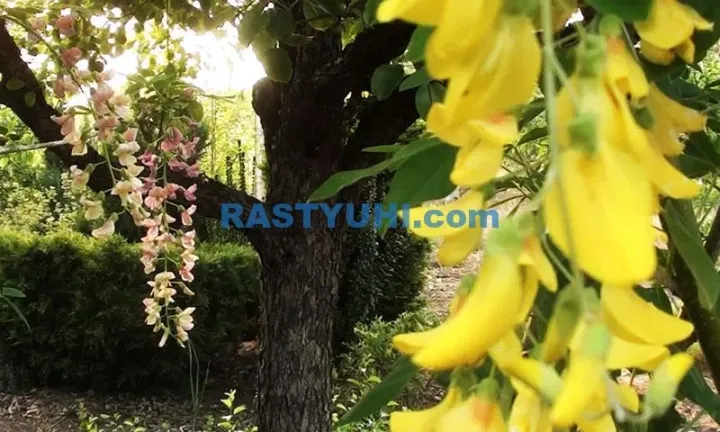
Description
Growing requirements
Adam's Laburnum (Laburnocytisus adamii) is a remarkable graft-chimera, a botanical curiosity formed by the union of Laburnum anagyroides and Chamaecytisus purpureus. Belonging to the Fabaceae family, it maintains the characteristics of both parent species within a single organism.
The culture thrives in full sun, which is essential for maximizing the unique flowering potential. It requires well-drained, fertile soil that does not hold excess moisture, as the root system is sensitive to waterlogging and soil compaction.
Climate adaptability is moderate; the plant prefers temperate regions with stable seasonal transitions. In cooler zones, it requires sheltered locations and protection from harsh, drying winds that can cause damage to the thin bark during winter.
Maintenance involves routine pruning to preserve the plant's shape and to remove any reversion branches that might appear as pure Laburnum or Cytisus shoots. Regular monitoring of the graft union is necessary to ensure the structural integrity of the plant.
It is primarily utilized as a high-value ornamental shrub in botanical gardens and residential landscaping. Its ability to produce flowers of different colors simultaneously makes it a popular specimen for collectors of rare woody plants.
Main diseases and pests
Aphids are the most common pest, frequently infesting tender growth during the spring season. Early intervention with insecticidal soaps or systemic pesticides is recommended to prevent curling leaves and stunted growth.
Powdery mildew represents a significant fungal threat, especially in humid and poorly ventilated environments. Proper spacing between ornamental plants is essential to promote air circulation and reduce disease pressure.
Canker and other fungal bark infections can occur if the plant is pruned incorrectly or exposed to mechanical injury. Using sanitized tools and covering wounds with appropriate dressings is a standard agrotechnical requirement.
Leaf spot diseases, caused by various fungal pathogens, may occur during wet summers, leading to premature foliage drop. Fungicide applications are necessary during periods of high humidity to protect the plant's aesthetic value.
Given the plant's origin, it is sensitive to environmental stressors like prolonged drought, which can weaken the plant and make it more susceptible to secondary pests such as bark beetles or scale insects.