
Kuruna debilis
Kuruna debilis
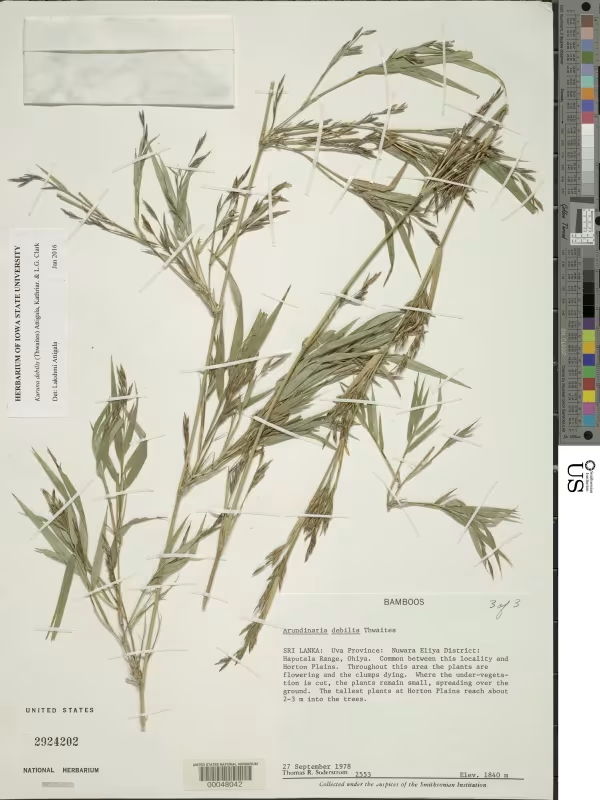
Description
Sowing dates
The sowing of Kuruna debilis requires precise timing, as the soil temperature should ideally reach 12-14 degrees Celsius to ensure uniform germination.
Late spring is typically the most appropriate period for planting, avoiding the risk of frost damage that can significantly impact emerging seedlings.
The seeding rate must be calculated based on seed viability and target plant density to minimize resource competition during the early vegetative stage.
Seed depth should be kept uniform, as planting too deep can delay emergence and weaken the overall structure of the plant at the beginning of its lifecycle.
Implementing a balanced crop rotation schedule is essential to prevent the buildup of soil-borne pathogens and to maintain long-term field productivity.
Growing requirements
Kuruna debilis thrives in well-drained, sandy loam or light soil types that possess a neutral or slightly acidic pH balance for optimal nutrient availability.
While the plant shows moderate drought tolerance, consistent moisture throughout the active growth phase is critical to maximize biomass production.
Abundant sunlight is a primary requirement for this crop; excessive shade can result in etiolated growth and a notable decline in overall yield.
Proper nutrient management is necessary, focusing on balanced fertilization while avoiding excessive nitrogen, which can lead to lodging and harvest difficulties.
Fields with a history of intensive row cropping are ideal candidates, provided they are effectively managed for weeds prior to the initial planting phase.
Yield
The yield potential of Kuruna debilis is heavily influenced by the adoption of modern agricultural practices and the fertility levels of the field.
During favorable growing seasons with adequate precipitation, the crop produces high-quality biomass suitable for various agricultural and industrial applications.
Grain production consistency is achieved through timely intervention, including pest control and the application of supplemental nutrients during key growth stages.
Data suggests that even under standard management regimes, the crop maintains reliable output levels, proving its versatility in different growing regions.
Advanced agricultural techniques, such as precision irrigation and soil testing, allow growers to push the yield limits of this unique species significantly.
Main diseases and pests
Soil-dwelling insects represent the primary threat to young plants, necessitating the use of high-quality seed treatments to protect the root system.
Excessive humidity can increase the risk of fungal infections, which target foliage and negatively affect the plant's ability to perform photosynthesis.
Effective weed management is vital, as Kuruna debilis is sensitive to competition during the establishment phase, requiring either mechanical or chemical control.
Regular field scouting is essential to identify early-stage pest infestations, allowing for rapid deployment of targeted control measures to minimize damage.
Maintaining biological balance in the field through proper selection of resilient varieties can mitigate the impact of common agricultural diseases.
Harvesting
The harvest should occur when the crop has reached full physiological maturity, indicated by specific changes in the plant’s structural coloration and moisture levels.
Timeliness is critical to prevent yield losses caused by seed shattering or weathering if the plants are left in the field past their optimal maturity window.
Standard harvesting equipment can be employed provided the machinery is correctly adjusted to prevent seed cracking or mechanical damage during the process.
Post-harvest conditioning, including thorough cleaning and moisture reduction, is a prerequisite for ensuring long-term shelf life and high product quality.
Logistics must be well-coordinated to ensure that the gathered harvest is transported to processing facilities before any quality degradation occurs.