
Kumara plicatilis
Kumara plicatilis
Description
Growing requirements
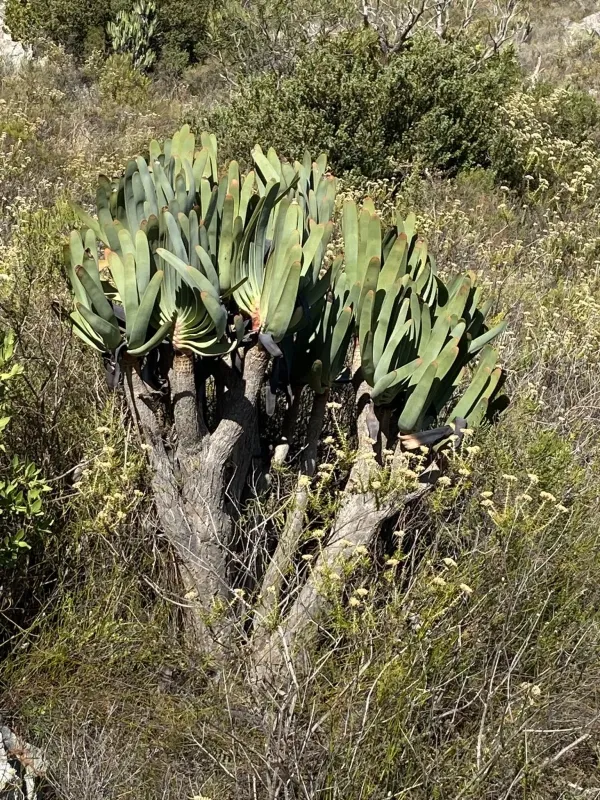
Kumara plicatilis, commonly known as the Fan Aloe, is a perennial succulent belonging to the Asphodelaceae family. It originates from the Western Cape province of South Africa.
The plant is characterized by its distinctive fan-shaped leaf arrangement and a woody, branching stem. It is slow-growing but can develop into a small, sturdy tree structure over many years.
Agronomically, this species requires a full sun exposure to maintain its compact growth habit. Reduced light intensities result in etiolation, which significantly degrades the ornamental quality of the specimen.
Soil requirements are strict: the substrate must be highly porous and inorganic. A mix of coarse sand, perlite, and small gravel ensures the drainage necessary to prevent root asphyxiation.
The climate must be arid to semi-arid. It thrives in temperatures between 15°C and 28°C and requires a clear distinction between the growing season and the dormant winter period.
Main diseases and pests
The primary threats to Kumara plicatilis are pathogen-induced rots caused by excessive humidity or poor soil drainage, which quickly compromise the root system.
Mealybugs are the most persistent insect pests, often settling in the tight crevices between the overlapping leaves where they are difficult to reach with topical treatments.
Scale insects can also infest the stems and leaves, extracting phloem sap and weakening the plant, leading to stunted growth or chlorosis.
Fungal leaf spot diseases may occur in environments with poor air circulation and high atmospheric moisture, especially during the colder months.
Effective management includes maintaining a dry growing environment, ensuring adequate spacing between plants, and applying systemic insecticides only when necessary.