
Kirkia acuminata
Kirkia acuminata
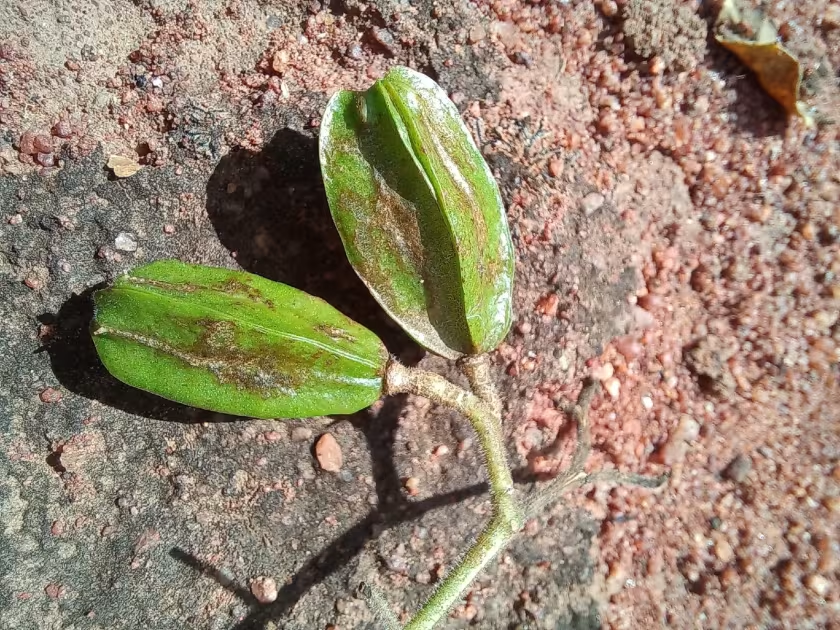
Description
Growing requirements
Kirkia acuminata, belonging to the Kirkiaceae family, is a deciduous tree species native to the tropical and subtropical regions of Southern Africa. It is well-adapted to rocky woodlands and arid conditions.
The botanical highlight of this plant is its ability to survive extreme drought through its succulent-like root system, which stores significant amounts of water during the rainy season for later use.
To cultivate this species successfully, one must provide well-drained, sandy, or rocky soil. The tree cannot tolerate waterlogging, as its roots are highly susceptible to anaerobic conditions and subsequent decay.
Regarding climate, the plant thrives in warm, sunny environments with high light intensity. It is sensitive to frost, which limits its outdoor cultivation to temperate and tropical zones without significant cold waves.
Economically, the tree is utilized for its fine-grained wood, which is popular in furniture making and construction. Furthermore, the roots serve as an essential emergency water source for local populations in dry regions.
Main diseases and pests
The primary concern for Kirkia acuminata plantations is root rot, which typically develops when trees are planted in heavy, clay-rich, or poorly drained soils.
Insects like scale insects and mealybugs can infest the branches and foliage, particularly when the tree is stressed by environmental factors or grown in a poorly ventilated greenhouse environment.
Wild game animals pose a constant risk in natural and semi-wild habitats, often excavating the ground to feed on the water-rich tuberous roots, requiring physical protection for young specimens.
Fungal leaf spot diseases may occasionally occur during humid seasons, though the plant generally exhibits good resistance to such infections if kept in open, airy conditions.
Integrated pest management should focus on early detection and maintaining soil health, as chemical treatments are less effective than proactive site selection and proper irrigation control.