
Kernera saxatilis
Kernera saxatilis
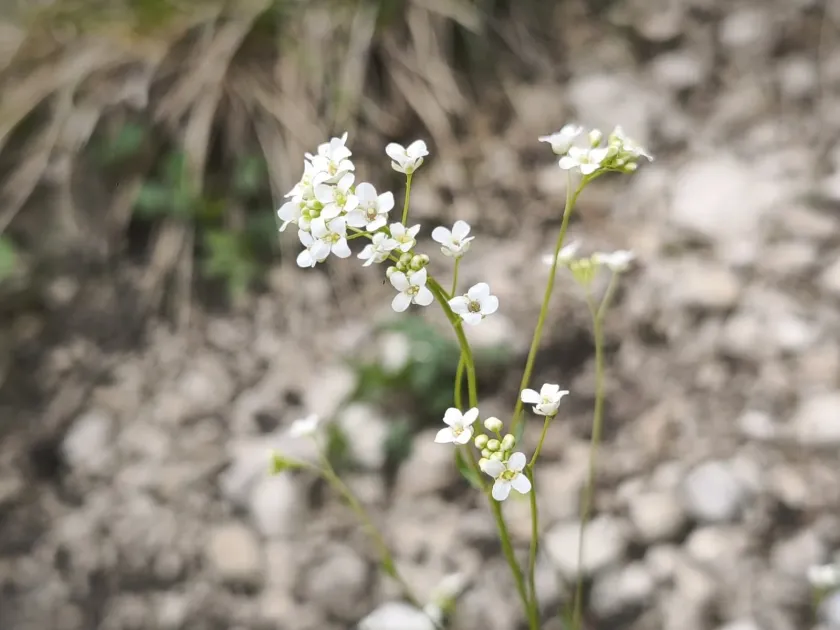
Description
Sowing dates
Sowing Kernera saxatilis is best performed in late autumn or early spring to allow for natural stratification of the seeds. Seeds are small and should be sown onto a fine, well-draining seedbed with minimal soil covering.
When using a nursery for propagation, ensure that the substrate is composed of a mixture of sand and perlite. This mimics the rocky environment of its natural habitat and ensures optimal germination rates for the alpine species.
Watering during the germination phase must be handled with care to maintain consistent humidity without causing waterlogging. Once the seedlings reach the true-leaf stage, they should be hardened off before permanent planting.
Spacing should be managed to prevent overcrowding, as good air circulation is essential for the health of this species. In field conditions, a distance of 20–30 cm between plants is typically recommended to allow for crown expansion.
As a member of the Brassicaceae family, it is important to avoid planting in areas previously occupied by other cruciferous crops. This practice significantly reduces the risk of soil-borne diseases characteristic of the family.
Growing requirements
Kernera saxatilis is a true lithophyte, requiring soils with excellent drainage. Heavy clay soils are unsuitable and will inevitably lead to root system failure and the death of the plant during periods of high precipitation.
The plant thrives in alkaline to neutral pH levels, making it ideal for limestone-rich soils. If the soil is acidic, the addition of crushed limestone or dolomite is necessary to facilitate proper nutrient uptake and plant vigor.
Exposure to full sun is critical for maintaining the plant's compact, rosette-forming habit. In shaded environments, the stems become etiolated and the plant loses its natural aesthetic appeal and structural integrity.
This species is highly adapted to wind and cold temperatures, reflecting its mountain origins. However, it requires protection from winter dampness, as standing water during freeze-thaw cycles can cause tissue necrosis.
Fertilization should be kept to a minimum. Excessive nitrogen promotes lush, soft growth that is highly susceptible to both pest attacks and winter kill. A lean soil environment is much more conducive to long-term survival.
Main diseases and pests
Root rot is the primary threat to the health of the plant, often resulting from poor soil drainage or excessive irrigation. Once the root crown is infected, recovery is difficult and removal of the plant is usually required.
Flea beetles are common pests that feed on the foliage of Brassicaceae plants, leaving characteristic small holes in the leaves. Regular inspection and the use of physical barriers can help mitigate damage to the rosettes.
Gastropods such as slugs and snails are particularly problematic during wet seasons. They can strip the foliage quickly, severely impacting the health and ornamental value of the plants if not controlled properly.
Nematodes can affect the root system in poorly managed plots, leading to stunted growth and yellowing of the leaves. Avoiding monoculture and using diverse planting schemes are effective long-term preventative measures.
Preventative maintenance involves keeping the area free of debris and ensuring the surrounding soil surface is covered with gravel. This mulch layer helps regulate surface moisture and prevents direct contact between leaves and soil.