
Kepel
Stelechocarpus burahol (Blume) Hook. f. et Thomson
Description
Sowing dates
Kepel seeds have low viability and lose their germination potential quickly after removal from the fruit, so they should be planted immediately after harvest.
For germination, use light, well-drained substrates rich in organic matter, maintaining a constant humidity level and a temperature no lower than 25–28 degrees Celsius.
The germination process can be quite lengthy, sometimes taking several months, which requires significant patience from the grower.
Young seedlings need protection from direct sunlight in the first months of their life, as they are adapted to growing in the lower canopy of the rainforest.
Transplanting to a permanent location should be done carefully to avoid damaging the taproot, as the plant is extremely sensitive to any root system trauma.
Growing requirements
Kepel is an evergreen tree belonging to the Annonaceae family, which reaches 20–25 meters in nature, although it is usually kept smaller under cultivation.
The crop has strict climatic requirements: it can only thrive in humid tropical conditions without a distinct dry season.
The optimal soils for this plant are deep, fertile loams with an acidic to neutral pH, which provide excellent drainage.
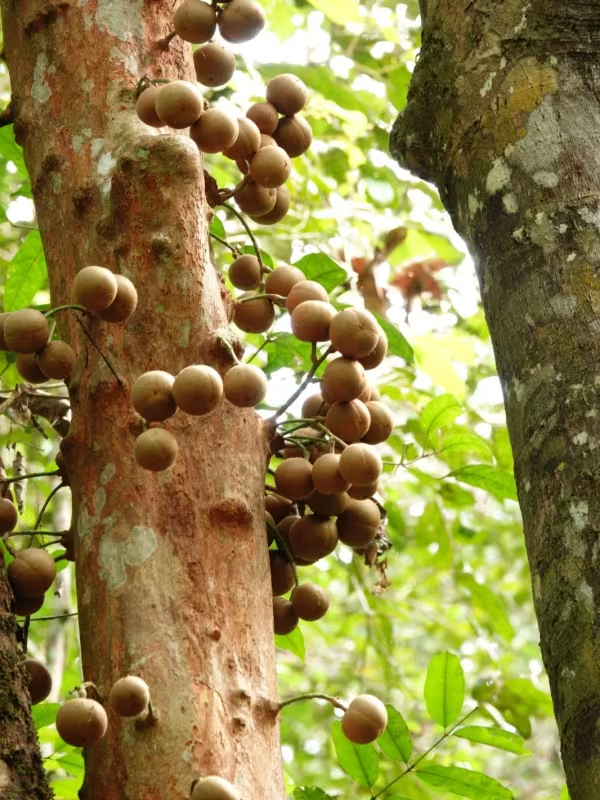
The plant exhibits a unique botanical feature known as cauliflory, where flowers and subsequent fruits develop directly on the trunk of the tree.
Successful growth requires high atmospheric humidity and the absence of sudden temperature fluctuations, which restricts its cultivation range to Southeast Asia.
Yield
Kepel fruits are spherical or ellipsoid berries the size of a small apple with a brownish, velvety skin.
The tree starts producing its first harvest only 7–10 years after planting, making it a long-term investment for farmers.
Inside the fruit is a juicy, yellowish pulp valued for its unique aroma and sweet taste, often described as a mix of mango and violet.
Historically, the fruit was famous in Indonesia because its consumption was believed to give human sweat a pleasant scent, often linked to royalty.
Beyond culinary uses, both the fruit and the leaves are used in traditional medicine as antiseptic and diuretic agents.
Main diseases and pests
The main pests for this crop in natural environments include various species of mealybugs and aphids that damage young shoots and buds.
Improper irrigation and water stagnation in the root zone quickly provoke the development of root rots, which can lead to the death of the tree.
Fungal leaf infections, caused by poor crown ventilation in high humidity, require regular sanitary pruning and thinning of the branches.
When grown in orchards, the tree may suffer from fruit fly infestations, which lay eggs in the ripening fruits on the trunk.
Protection strategies include the use of eco-friendly insecticides and strict adherence to irrigation schedules to prevent the growth of pathogens.