
American yellowwood
Cladrastis kentukea (Dum. Cours.) Rudd
Description
Growing requirements
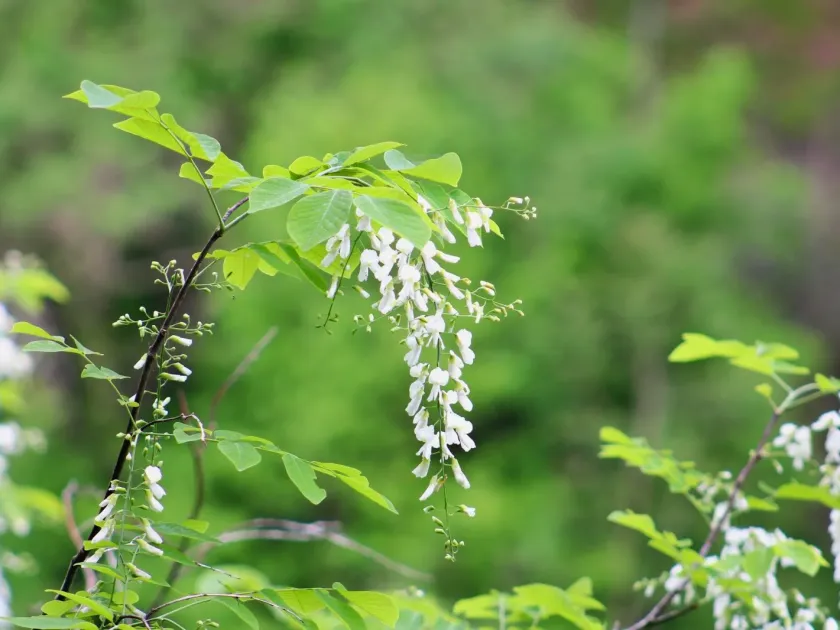
Cladrastis kentukea, known as American yellowwood, is a distinguished member of the Fabaceae family. Native to the Southeastern United States, this medium-sized deciduous tree is celebrated for its fragrant, white, pendulous flower clusters that appear in late spring.
The tree thrives best in deep, fertile, and well-drained soils. While it can adapt to various soil types, it prefers slightly acidic to neutral environments. Full sun exposure is essential for the tree to produce its characteristic profuse blooming and maintain a healthy, dense canopy structure.
Regarding climate, this species demonstrates impressive cold hardiness, adapting well to diverse temperate climates. It is relatively drought-tolerant once established but requires consistent moisture during its initial growth phase to develop a robust root system.
Agricultural management of yellowwood involves minimal intervention compared to other ornamental species. Pruning should be handled with caution and scheduled for the late summer months, as early spring pruning can lead to heavy sap flow that weakens the tree.
In terms of landscaping use, it is highly valued as a specimen tree in parks and large gardens. Beyond its visual appeal, its ability to fix atmospheric nitrogen contributes positively to the soil biology of the surrounding area.
Main diseases and pests
The most significant physical threat to Cladrastis kentukea is its brittle wood, which is susceptible to breakage during heavy ice storms or high wind events. Proper structural pruning is necessary from a young age to prevent V-shaped crotches that split easily.
Disease outbreaks are rare in this species, provided the soil drainage is adequate. However, root rot can occur in compacted or waterlogged soils, leading to a general decline in the tree's vigor and premature leaf drop.
Insect pests typically do not pose a major economic or aesthetic threat. Occasional infestations of aphids or leaf-feeding caterpillars are usually managed naturally by local predator populations without requiring heavy pesticide application.
Maintaining the integrity of the bark is crucial for health, as open wounds can invite wood-boring insects. Avoiding mechanical damage from lawn equipment around the trunk base is a simple yet vital management practice.
Overall, long-term health is best achieved through balanced fertilization and moderate watering during heatwaves. Avoiding excessive nitrogen ensures the tree builds strong, resilient wood rather than rapid, succulent growth.