
Kayea navesii
Kayea navesii
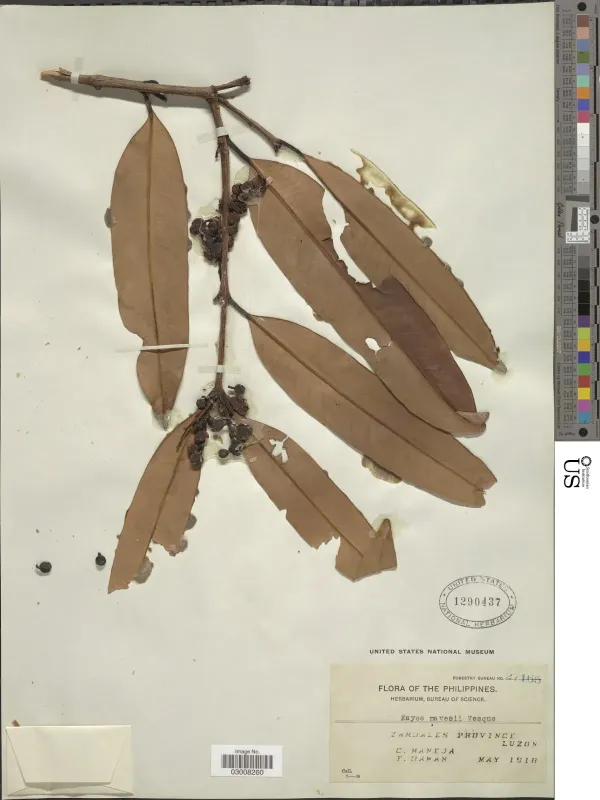
Description
Growing requirements
Kayea navesii is a significant evergreen tree belonging to the Clusiaceae family. It is native to the tropical forests of Southeast Asia, where it forms an integral part of the local ecosystem.
The plant thrives in humid tropical environments, requiring consistent rainfall and high humidity levels throughout the growing season to maintain optimal photosynthetic activity.
Soil requirements focus on deep, fertile, and well-drained conditions. The species is sensitive to waterlogging, necessitating landscapes with proper drainage to prevent root diseases.
Light management is crucial; while mature trees are tolerant of high sunlight, young seedlings often require partial shade to establish their canopy structure effectively.
General silvicultural care involves periodic monitoring of stand density and ensuring that young trees are not suppressed by faster-growing competitive vegetation in the forest floor.
Yield
Kayea navesii is primarily cultivated for its high-quality timber, which is recognized for its impressive hardness, density, and resistance to environmental stress.
The timber is widely utilized in luxury furniture manufacturing and high-end joinery, where the physical properties of the wood ensure long-term durability of the end products.
In traditional forestry, the wood is harvested for construction beams and structural components, reflecting its historical value in regional development projects.
Economic yield depends on long-term forestry cycles, as the species requires several decades to achieve the size necessary for industrial timber extraction.
Furthermore, research into the phytochemical properties of Clusiaceae species continues to highlight potential medicinal applications, adding value beyond structural timber utility.