
Karrabina benthamiana
Karrabina benthamiana
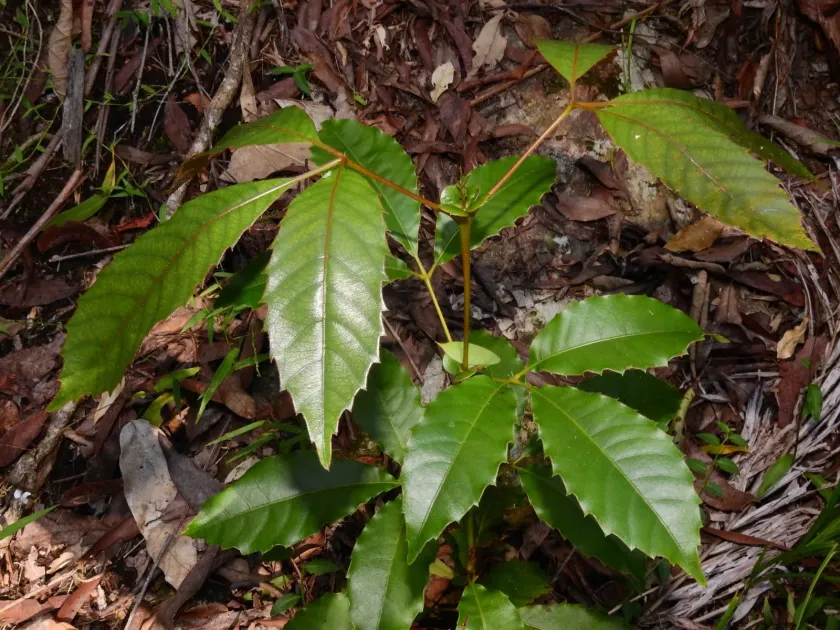
Description
Growing requirements
Karrabina benthamiana is a large, evergreen tree belonging to the Cunoniaceae family. It is a species native to the tropical and subtropical rainforests of eastern Australia, where it plays a significant role in the local ecosystem.
The species prefers fertile, well-drained soils that are rich in organic matter. Optimal growth is observed in areas with deep humus layers, which are sheltered from strong winds and intense direct sunlight during the seedling stage.
This crop requires consistently high humidity and adequate rainfall throughout the year. Due to its sensitivity to heavy frosts, cultivation is generally restricted to temperate or mild subtropical climate zones.
In agroforestry, the tree is prized for its ability to form a straight, tall trunk when planted in dense stands. The species is highly sensitive to waterlogging, which can cause severe root rot and stunted development.
Botanically, the species is identified by its opposite leaves and small, clustered flowers. It is widely recognized in commercial forestry for its contribution to reforestation efforts and its high-quality timber known as Red Silky Oak.
Yield
The economic value of Karrabina benthamiana is centered on its timber, which is highly sought after for furniture manufacturing and cabinetry. The wood is prized for its attractive grain pattern and structural durability.
In forestry management, the harvest cycle spans several decades. With proper silvicultural practices, the tree reaches a size that ensures a consistent yield of high-grade timber suitable for the premium market.
Main industrial uses include the production of decorative veneer, high-end interior joinery, flooring, and fine furniture. The wood is dense, stable, and responds well to various finishing techniques and polishing.
Forestry experts note that the quality and yield of the timber depend on optimal stand density and systematic pruning of lateral branches. This management strategy promotes the growth of clean, knot-free logs.
Beyond its timber production, the tree serves critical environmental roles by supporting biodiversity and preventing soil erosion in managed forest landscapes.
Main diseases and pests
Primary threats to this crop include pathogenic fungi that thrive in humid environments with poor air circulation. Root and trunk decay are common issues that can lead to significant biomass loss and reduced timber quality.
Wood-boring insects are the most significant pests, often damaging the sapwood and heartwood. Effective management involves strict forest hygiene protocols and the removal of compromised or weakened specimens.
Invasive plant species pose a competitive threat to young Karrabina benthamiana plants by limiting their access to sunlight and soil nutrients during the early stages of establishment.
To mitigate these risks, it is essential to follow standardized planting density and spacing guidelines to ensure proper airflow. Routine monitoring of the canopy and bark allows for the early detection and management of health issues.
Integrated Pest Management (IPM) practices, which prioritize biological controls and minimal chemical usage, are highly recommended for sustainable plantation management.