
Karelinia caspica
Karelinia caspica
Description
Growing requirements
Karelinia caspica is a perennial herb belonging to the Asteraceae family. It is a highly specialized halophyte that has evolved to thrive in the harsh, hypersaline soil conditions typical of arid and semi-arid desert regions.
The plant possesses a robust and deep-reaching root system, which allows it to access groundwater and moisture in environments where surface evaporation rates are extremely high. This morphological adaptation is essential for its survival in desert landscapes.
Its natural range is primarily concentrated around the Caspian Sea basin, extending across vast tracts of Central Asia. The species is well-adapted to extreme temperature fluctuations, ranging from intense summer heat to severe winter frosts.
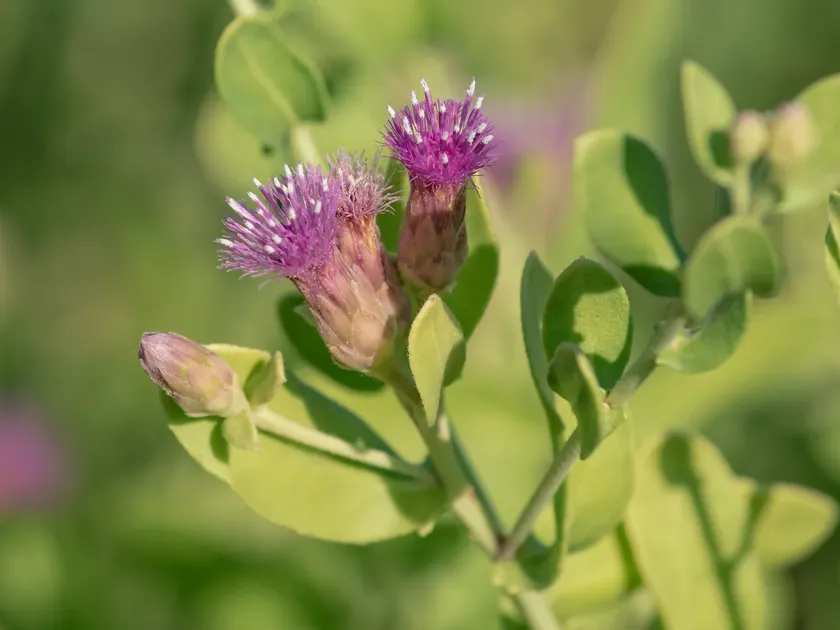
Botanically, Karelinia caspica is characterized by pubescent foliage, which serves as a protective layer to reduce transpiration rates. The inflorescences consist of typical aster-like flower heads, often displaying shades of pink to purple.
In terms of agricultural utility, it serves as a critical forage plant for livestock, particularly sheep and camels. It remains a vital food source in late autumn and winter when other desert vegetation loses its nutritional value.
Main diseases and pests
The main pests affecting this species include various desert-dwelling insects, such as locusts and specialized coleopterans that can inflict damage on leaves and stems during peak development periods.
While the species is hardy, it can be susceptible to fungal pathogens like rusts if growing in environments where localized moisture accumulation occurs near the soil surface.
The most significant threat to the survival of natural stands is overgrazing. Excessive consumption of the green mass prevents the plant from setting seeds, thereby hindering natural regeneration cycles.
Large-scale conversion of semi-arid lands into intensive irrigated croplands threatens the remaining wild populations, as the plant does not compete well with cultivated crops under high-input management.
Conservation strategies should focus on rotational grazing management and the protection of natural habitats from conversion to ensure the continued availability of this forage resource.