
Red oat grass
Themeda triandra Forssk.
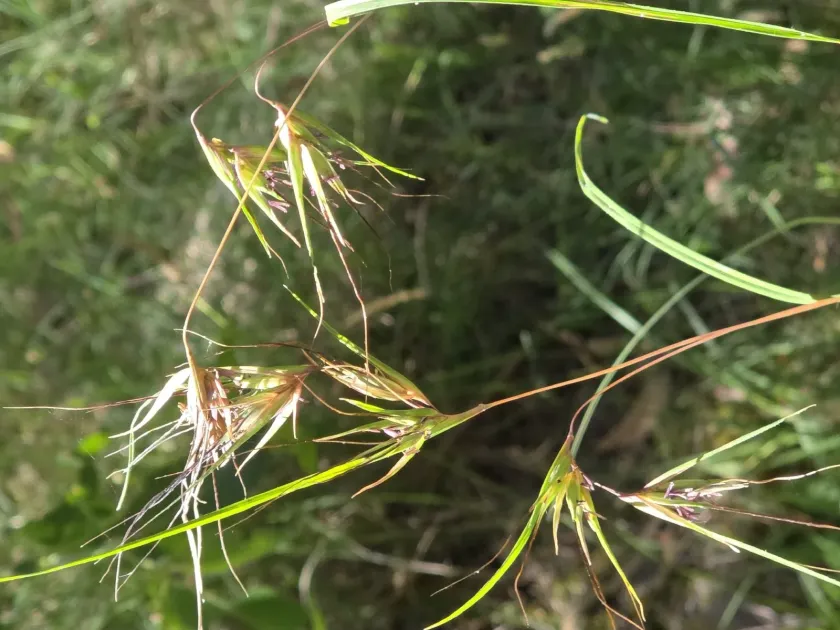
Description
Growing requirements
Themeda triandra, commonly known as red oat grass, is a perennial bunchgrass belonging to the Poaceae family. It is widely distributed across the tropical and subtropical regions of Africa, Asia, and Australia, where it serves as a primary species in many savanna ecosystems.
This grass is highly adaptable to various soil conditions, including low-nutrient, rocky, and heavy clay soils. It shows remarkable resilience to prolonged drought, making it an ideal choice for the rehabilitation of degraded lands in arid and semi-arid environments.
The optimal climate for growth is warm and sunny with sufficient precipitation during the growing season. Red oat grass is sensitive to heavy frost; therefore, it thrives best in mild climates where it can fully develop its tiller base and maintain perennial productivity.
Botanically, the plant features dense tufts with narrow leaves, reaching heights between 30 and 150 centimeters. During the flowering stage, it produces complex, reddish-brown panicles, which give the grass its characteristic appearance and name, making it recognizable in the landscape.
Agricultural requirements for maintaining this crop are relatively low. While the grass responds positively to moderate nitrogen fertilization, the key to successful management is implementing a rotational grazing system that allows the plants to recover and prevents overgrazing.
Yield
The primary agricultural use of red oat grass is as a high-quality forage for livestock. When managed correctly, it provides a balanced diet of fiber and protein, which is essential for the healthy growth and development of grazing ruminants in tropical regions.
The yield of biomass is highly dependent on rainfall patterns and grazing intensity. Sustainable grazing practices ensure that the grass remains productive for several years, providing a consistent source of feed without the constant need for plowing and reseeding.
In many regions, red oat grass is interseeded with legumes to enhance the overall feed quality and soil nitrogen levels. This symbiotic management approach improves animal weight gain and supports better soil health, creating a more sustainable agricultural system.
Beyond livestock, the crop is vital for soil conservation. Its deep and extensive root system effectively binds soil particles, significantly reducing the risk of erosion on sloping lands and protecting the topsoil from wind and water degradation.
Environmental and landscape uses of this grass are also notable. It is frequently employed in ecosystem restoration projects to cover disturbed or mined lands. Its ability to colonize areas rapidly and stabilize the ground makes it a valuable tool for environmental managers.
Main diseases and pests
Pathogenic threats primarily include rust fungi, which can affect the leaves under humid conditions. To mitigate these risks, farmers should focus on maintaining adequate air circulation within the stand and avoiding overly dense sowing patterns that foster pathogen spread.
Insect pests, such as grass flies, may occasionally damage young seedlings. However, the inherent hardiness of Themeda triandra usually allows the plants to withstand these attacks without the need for intensive chemical interventions, supporting sustainable farming practices.
Overgrazing represents a major threat to the long-term viability of these grasslands. When animals consume the grass too close to the roots, the plant loses its energy reserves, making it susceptible to competition from invasive weeds and reducing its overall density.
Fire is a critical management factor. While the species is adapted to fire, frequent or high-intensity burning can be detrimental if not managed correctly. Controlled burns are sometimes used to clear dead biomass and encourage fresh regrowth in the spring.
Competition from weeds is most intense during the establishment phase. Since the growth rate of red oat grass is initially slow, proper site preparation and weed control before seeding are essential steps to ensure the crop gains a competitive advantage over unwanted vegetation.