
Dacrycarpus dacrydioides
Dacrycarpus dacrydioides (A. Rich.) de Laub.
Description
Growing requirements
Dacrycarpus dacrydioides, commonly known as Kahikatea, belongs to the Podocarpaceae family. It is an evergreen conifer native to New Zealand, famous for being the tallest tree species in the country, often reaching heights of over 50 meters.
The species thrives in deep, fertile, alluvial soils. In its natural range, it typically occupies swampy lowland forests and river floodplains, demonstrating a high tolerance for waterlogged soil conditions that would kill many other conifers.
Climate requirements include a temperate maritime environment with consistent rainfall and high humidity. It does not tolerate prolonged frost or extreme drought, preferring sheltered valleys and humid microclimates for optimal development.
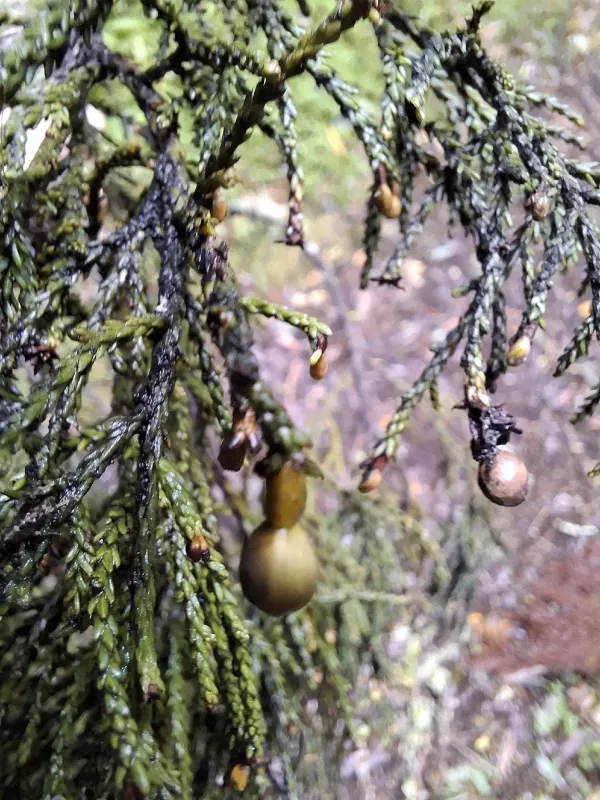
A distinctive botanical trait of this species is heterophylly. The juvenile foliage consists of narrow, needle-like leaves arranged in two rows, while the mature foliage transforms into small, scale-like leaves pressed closely against the branchlets.
Cultivation requires careful site selection, focusing on areas with high soil moisture availability. Young trees benefit from semi-shade conditions during their initial growth phase, as intense sunlight can cause desiccation of the delicate juvenile needles.
Yield
Historically, the timber of Kahikatea was highly sought after due to its pale, non-resinous wood that is easy to plane and cut. It was famously used for manufacturing butter boxes for dairy exports, as the wood did not impart any flavor to the product.
In modern forestry, the focus has shifted toward restoration and conservation. While the growth rate is relatively slow compared to commercial pines, it is a key species in forest regeneration projects aiming to restore lowland ecosystems.
The tree produces fleshy, bright orange-red arils, which are a vital food source for native bird species, playing a crucial role in the local food chain and the dispersal of forest seeds throughout the landscape.
Yield management in contemporary settings involves integrating Dacrycarpus into mixed-species plantings, where it provides structural diversity and high-quality biomass over long production cycles of several decades.
Economic sustainability is achieved by balancing the production of high-value timber with ecosystem services, such as carbon sequestration and flood mitigation provided by mature lowland stands.
Main diseases and pests
Introduced rodents, particularly rats, are a major threat to the species, as they consume the seeds, severely hindering natural regeneration and the establishment of new seedlings in the wild and in nurseries.
Root rot caused by various soil-borne pathogens can occur if seedlings are planted in stagnant water without proper drainage. Maintaining healthy oxygen levels in the root zone is essential for preventing these issues.
Pest insects, including various species of scale insects and leaf-miners, can cause localized damage. Integrated Pest Management (IPM) practices, including the use of biological controls, are recommended for large-scale nursery cultivation.
Competition from aggressive weeds and invasive shrub species can overwhelm young trees. Mechanical clearing or careful mulching around the base of the saplings is necessary during the first few years of establishment.
Climate change poses a risk to established stands through altered hydrological patterns. Increased frequency of severe weather events or drying of wetlands can lead to tree stress, making them susceptible to opportunistic fungal infections.