
Juania australis
Juania australis
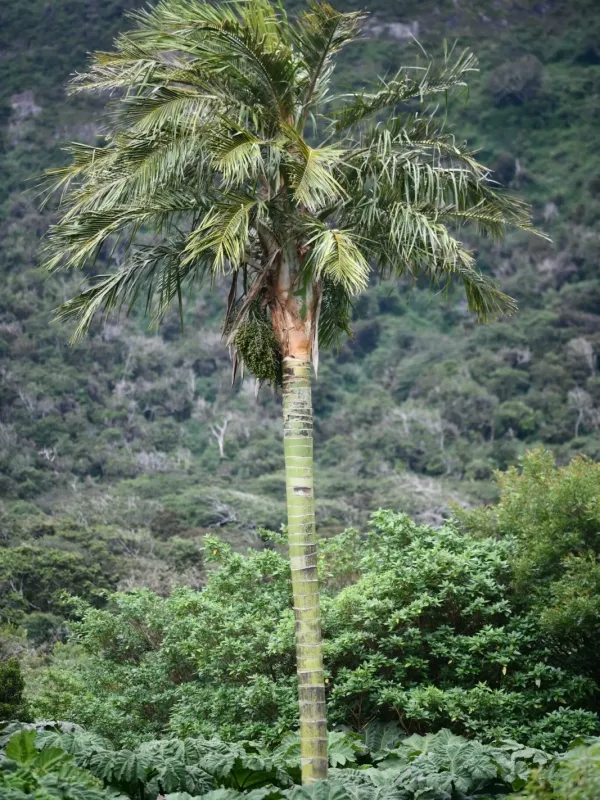
Description
Growing requirements
Juania australis is a unique, monotypic genus of palm within the Arecaceae family. It is strictly endemic to the Juan Fernández Islands, where it thrives in high-altitude, moist, and cool habitats on steep mountain slopes.
The palm demands a stable, cool, and maritime climate. It is highly intolerant of hot, dry conditions, which makes its successful cultivation outside its natural range a significant challenge for botanists and gardeners.
Requirements for the soil substrate include excellent drainage and high organic content. The roots are sensitive to waterlogging, necessitating a well-aerated medium to ensure long-term health and development.
Regarding light, the palm prefers bright, dappled sunlight. Direct, intense solar radiation can cause severe leaf scorch, particularly in specimens that are kept in greenhouse environments with limited air circulation.
Its growth habit is notably slow, meaning that management practices should prioritize consistency in moisture and temperature rather than rapid growth stimulation, which can weaken the plant.
Main diseases and pests
The most significant threats to Juania australis are root rot diseases caused by Phytophthora species or poor drainage conditions. These pathogens can kill a specimen quickly if the soil remains saturated.
Common horticultural pests, particularly spider mites and mealybugs, thrive in the stable, protected environments of greenhouses, often attacking the tender growth points and leaflets.
Inadequate airflow serves as a catalyst for fungal outbreaks. Ensuring that the plant has adequate space and ventilation is critical for minimizing the risk of foliar infections and infestations.
Chemical sensitivity is a key factor; this palm can react negatively to many common pesticides, suggesting that integrated pest management (IPM) is the safest route for maintenance.
Nutritional deficiencies often manifest as chlorosis or stunted frond development. A balanced, dilute feeding regimen is required to provide necessary nutrients without causing salt stress in the root zone.