
Jovellana sinclairii
Jovellana sinclairii
Description
Growing requirements
Jovellana sinclairii is a perennial decorative shrub belonging to the Calceolariaceae family. Originating from New Zealand, this plant is native to moist, shaded forest floors, which dictates its preference for specific growth conditions.
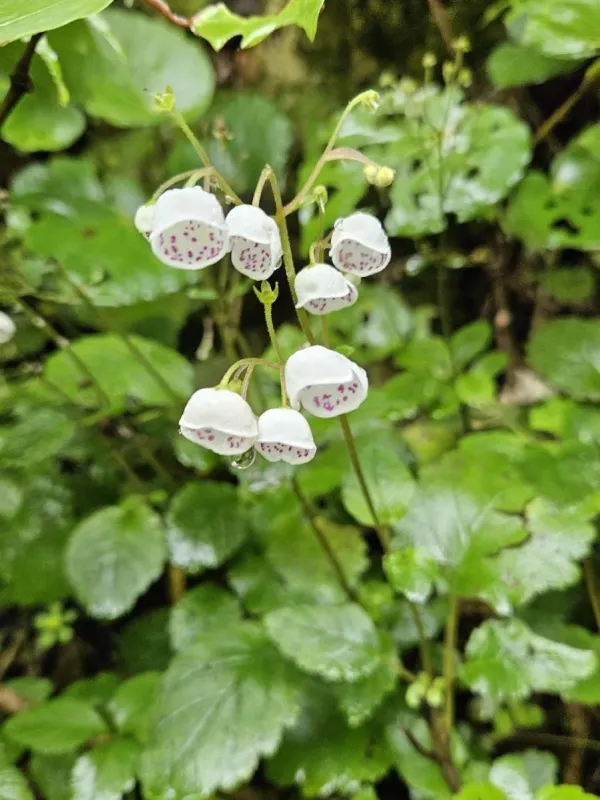
The plant features delicate, branching stems covered with soft, serrated, heart-shaped leaves. Its most striking feature is the abundant display of small, bell-shaped flowers that appear in white or pale lavender shades with intricate purple spotted patterns inside.
In terms of climate, the species thrives in cool, temperate environments. It is essential to protect the plant from extreme heat and intense direct sunlight, which can cause leaf scorch and general decline in plant vitality.
The soil requirements focus on moisture retention and aeration. A nutrient-rich, organic-based potting mix is ideal, provided it is equipped with efficient drainage to prevent waterlogging, which is detrimental to the plant’s fine root system.
As a container plant, it requires consistent care during the growing season. Maintaining stable humidity levels around the foliage is highly beneficial, especially when growing the plant in glasshouses or indoor conservatory conditions.
Main diseases and pests
The most common health issues for Jovellana sinclairii are related to fungal pathogens, particularly gray mold (Botrytis), which thrives in damp, poorly ventilated conditions.
Root rot is a significant threat to this species. Overwatering, especially during the dormant period or in cool conditions, frequently leads to the decay of the root system and plant collapse.
Pests such as aphids and spider mites are known to infest the plant, particularly when it is grown indoors where the air tends to be drier during the heating season.
Preventive maintenance involves regular inspection of the leaf undersides and ensuring adequate spacing between plants to promote proper air circulation and reduce humidity buildup.
Integrated pest management, including the use of horticultural oils or gentle insecticidal soaps, is recommended to keep the plant healthy without causing phytotoxicity to its sensitive foliage.