
Jatropha villosa
Jatropha villosa
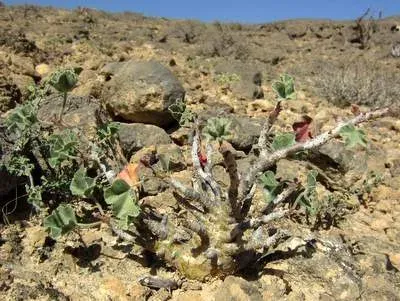
Description
Growing requirements
Jatropha villosa is a perennial shrub belonging to the Euphorbiaceae family. Native to the arid regions of Mexico, it has adapted to harsh environmental conditions, making it a subject of interest for agriculture in marginal, drought-prone lands.
Botanically, the plant is characterized by its resilience and ability to thrive in poor soil quality. It has evolved specific mechanisms to withstand extended dry seasons, including deep root systems and leaf structures that minimize water loss through transpiration.
Regarding climate requirements, the plant demands warm temperatures throughout the year. It is highly intolerant to frost, which makes its successful cultivation restricted to tropical and subtropical climates where temperatures remain above the freezing point consistently.
Soil management for this crop focuses on excellent drainage. It performs best in light, sandy soils where air circulation around the roots is sufficient. Waterlogging must be avoided at all costs to prevent the development of root rot and other pathogenic conditions.
The primary economic use of Jatropha villosa lies in its seed oil production. Given the increasing demand for sustainable energy, this species is studied as a renewable feedstock for biodiesel, contributing to the development of bio-based energy solutions.