
Japanese painted fern
Athyrium niponicum (Mett.) Hance
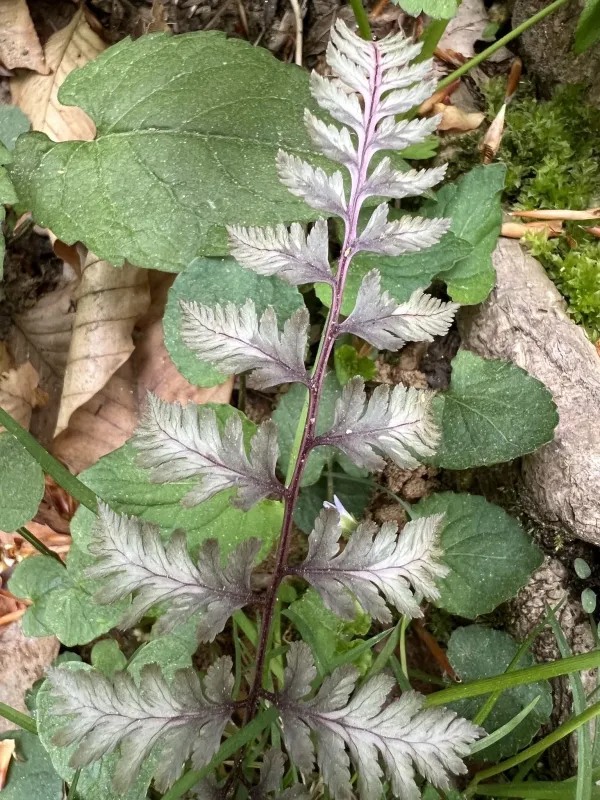
Description
Growing requirements
The Japanese painted fern (Athyrium niponicum) is a perennial decorative plant belonging to the Athyriaceae family. Native to East Asia, it has become a staple in landscape design due to its distinctive silver and purple-tinted foliage.
This species thrives in shaded to partially shaded environments. Exposure to direct intense sunlight can bleach the fronds and lead to rapid dehydration, so location selection is the most critical factor for success.
The plant requires moist, humus-rich, and well-draining soil. It performs best in slightly acidic conditions, mimicking the forest floor environments of its natural habitat in Japan and China.
Maintenance involves consistent watering to keep the root system hydrated, especially during high-temperature periods. Mulching with organic matter is highly recommended to retain soil moisture and suppress weed growth.
The plant is known for its cold hardiness and is suitable for various temperate climate zones. Proper winterization involves leaving dead fronds to provide natural insulation, then removing them in early spring before new growth starts.
Main diseases and pests
Athyrium niponicum is generally resistant to most plant diseases. However, root rot is a major risk when the planting site is characterized by poor drainage and waterlogged soil conditions.
Slugs and snails are the primary pests that damage the delicate fronds. These mollusks are particularly active during wet weather and can quickly defoliate young plants if left unmanaged.
Control strategies for slugs include manual removal, the use of beer traps, or applying iron phosphate-based pellets that are safe for the garden environment.
Occasional infestations of aphids or spider mites may occur if the plant is stressed by extreme heat or prolonged drought. Proper hydration acts as a primary defense against these invaders.
Ensuring adequate air circulation around the plants helps to prevent fungal foliage infections, such as leaf spot, which can occur during humid and stagnant weather conditions.