
Jamesia americana
Jamesia americana
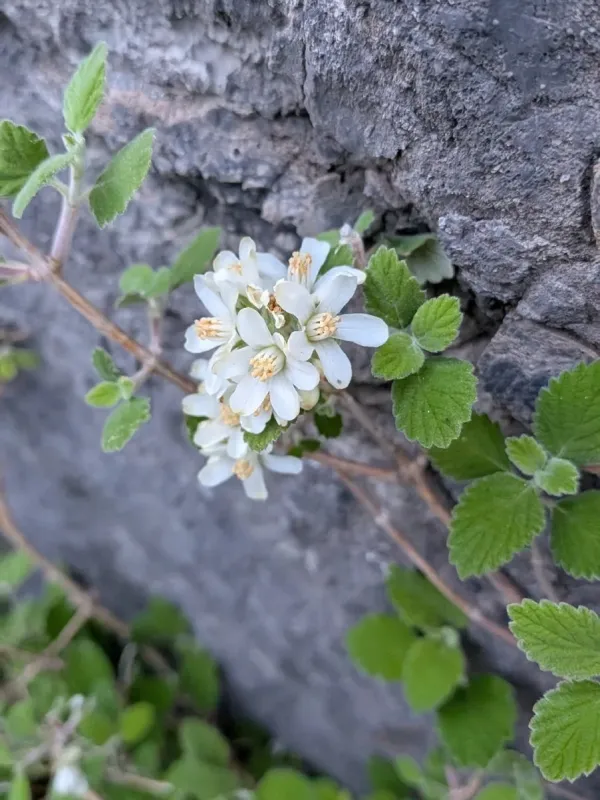
Description
Growing requirements
Jamesia americana, commonly known as cliff bush, belongs to the Hydrangeaceae family. This deciduous shrub is native to the rocky, mountainous regions of the western United States, where it thrives in harsh environments.
The plant is highly adapted to cool climates and requires a planting site with excellent drainage. It is notoriously intolerant of "wet feet," meaning that water-logged soil will quickly lead to root rot and eventual plant failure.
For optimal growth, it should be placed in well-drained, gritty, or sandy soil. While it can handle nutrient-poor substrates, it prefers full sun exposure to promote dense growth and a prolific display of its delicate, fragrant white-to-pink flowers.
This shrub is exceptionally cold-hardy, making it a reliable choice for alpine gardens or landscaping projects in temperate to cold zones. Its habit is generally upright and branched, reaching a modest height that fits well in small to medium landscapes.
In gardening, Jamesia americana is primarily used as an ornamental specimen in rock gardens. Its ability to grow in cliff-like conditions makes it a unique addition to xeriscaping or naturalistic garden designs.
Main diseases and pests
The primary threat to the longevity of cliff bush is fungal root disease caused by improper soil moisture management. Ensuring a porous, fast-draining substrate during the initial planting phase is the most effective preventative measure.
While relatively pest-free, the shrub can occasionally be attacked by spider mites, particularly during periods of intense heat and dry air. Regular monitoring during the mid-summer months is recommended to catch infestations early.
Powdery mildew may occur if the shrub is planted in a location with stagnant air and high humidity. Pruning to open up the canopy can significantly improve airflow and minimize the risk of such foliar diseases.
Young plants may be susceptible to damage from small mammals or rodents during the dormant season. Protecting the lower stems with hardware cloth or mesh can prevent girdling and winter mortality.
General horticultural hygiene, including the removal of dead or crossing branches, is sufficient to maintain the plant's health and vigor without the need for extensive chemical interventions.