
Ixia scillaris
Ixia scillaris
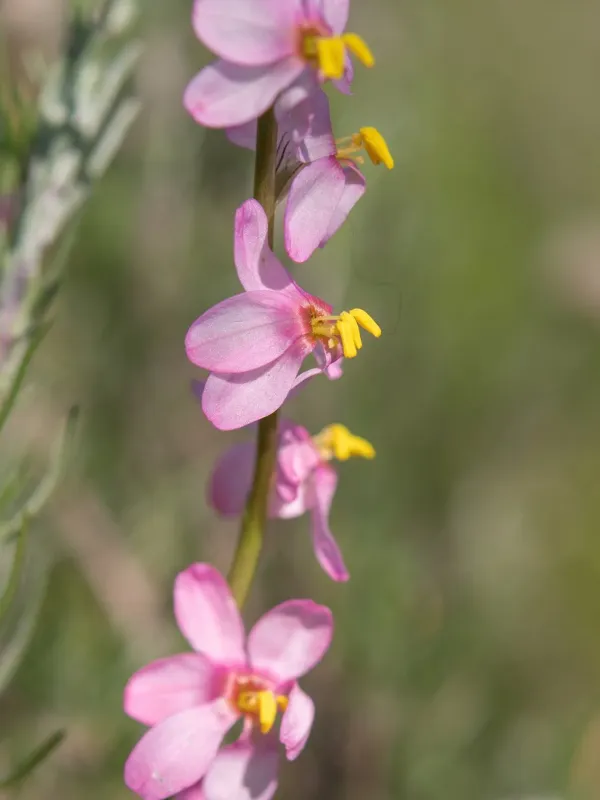
Description
Sowing dates
Ixia scillaris is a perennial cormous plant belonging to the Iridaceae family, prized for its delicate flowers and slender foliage. In regions with mild winter climates, corms are planted in autumn to allow for root establishment before the onset of the growing season.
In cooler climates, spring planting is recommended once the soil temperature consistently reaches 10 degrees Celsius. This timing prevents frost damage to the corms and promotes robust root development during the warmer spring months.
Planting depth should be maintained between 5 and 8 centimeters depending on the size of the corm. Proper spacing is essential, with a recommended gap of 10–15 centimeters between plants to ensure adequate ventilation and prevent crowding.
Propagation is achieved by separating offsets (cormlets) from the parent plant during the dormancy period. Seed propagation is also possible, though it is more labor-intensive and requires several years for the plant to reach maturity and produce blooms.
Soil preparation is a critical step, requiring the incorporation of organic matter and the installation of a drainage layer. High-quality drainage is the most vital factor in ensuring the longevity and health of the Ixia population.
Growing requirements
Ixia scillaris thrives in full sunlight, requiring maximum exposure to produce strong, upright stems. Insufficient light levels often result in etiolated growth and a significant reduction in the quantity and quality of flower production.
The ideal growing medium is a loose, sandy-loam soil with excellent drainage and a neutral to slightly acidic pH. Heavy, waterlogged soils are detrimental to the corms, often leading to rapid rot and complete crop loss.
Optimal growth occurs at temperatures ranging between 15 and 20 degrees Celsius. The plant is sensitive to cold drafts and strong winds, necessitating the selection of sheltered locations or the use of protective structures in exposed fields.
Water management must be precise; regular but moderate irrigation is preferred. Water should be applied only when the top layer of soil begins to dry, as constant moisture encourages fungal pathogens in the root zone.
As the plant enters dormancy after flowering, irrigation should be gradually reduced until the foliage withers. This period of physiological rest is essential for nutrient storage within the corms, which guarantees successful flowering in the following year.
Main diseases and pests
Fungal diseases such as Fusarium wilt and grey mold are the primary threats to Ixia scillaris. These conditions are typically exacerbated by high humidity levels and poor soil aeration, necessitating preventative fungicide treatments.
Spider mites represent a major pest risk, particularly during periods of high heat and low humidity. Their feeding habits cause chlorosis and premature leaf drop, requiring targeted acaricide applications to preserve the plant's health.
Aphids can cause significant damage by extracting sap from the stems and buds, weakening the plant and often spreading viral pathogens. Integrated pest management, including the use of systemic insecticides, is recommended for commercial growers.
Thrips are a major concern for flower quality, as they feed on petals and cause unsightly deformities. Regular monitoring during the budding stage allows for timely interventions that can prevent significant harvest degradation.
Soil-borne nematodes can attack the corm base, leading to systemic decay of the plant. Maintaining strict crop rotation protocols and using certified, disease-free corms are the best methods to minimize nematode outbreaks.