
Ixia campanulata
Ixia campanulata
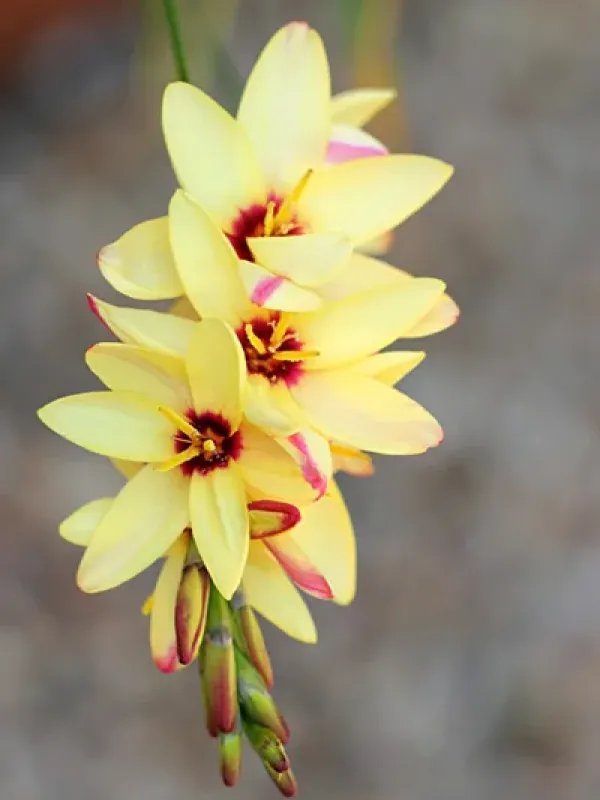
Description
Sowing dates
Ixia campanulata is a perennial cormous plant belonging to the Iridaceae family. In regions with mild winter climates, bulbs can be planted in autumn to establish roots before the cold season arrives.
In regions prone to heavy frost, spring planting is the standard procedure. It is recommended to plant the corms in late April or early May when the soil has sufficiently warmed up to 10-12 degrees Celsius.
Before planting, treat the corms with fungicides to protect them from soil-borne pathogens. The planting depth should range from 5 to 8 centimeters, depending on the bulb size and the soil density.
Maintain a spacing of 10 to 15 centimeters between bulbs. This proper distance ensures adequate air circulation around the developing foliage, which is essential for maintaining plant health.
Pre-sprouting the corms in pots can significantly accelerate the blooming process. This technique allows gardeners to enjoy the flowers earlier in the season and provides better control over the initial growth stage.
Growing requirements
As a plant of South African origin, Ixia campanulata requires full sun exposure to thrive. Avoid planting in shaded areas, as this will lead to weak growth and poor flowering performance.
The soil must be well-drained, loose, and sandy. Water stagnation is the primary cause of bulb failure, as it promotes rot and fungal infections within the root zone.
Ixia prefers neutral to slightly acidic soil conditions enriched with organic matter. Adding well-rotted compost to the planting bed improves soil structure and nutrient availability for the growing plants.
Temperature management is critical for this species as it is not frost-tolerant. In colder zones, the corms must be lifted from the ground after the growing season and stored in a frost-free location.
Regular but moderate watering is necessary during the active growth phase. Once the flowering period is over and the foliage begins to wither, water should be withheld to encourage the dormancy cycle.
Main diseases and pests
Fungal diseases, especially rot and mildew, pose the greatest threat to Ixia campanulata. These issues are almost always linked to excessive soil moisture and poor drainage in the planting area.
Common pests include aphids and spider mites, which feed on the sap of the leaves. These infestations can significantly weaken the plant, reducing its decorative potential and overall vigor.
Improper crop rotation can lead to the build-up of pathogens in the soil. It is advised to avoid planting Ixia in the same spot for several consecutive years to keep the disease pressure low.
For pest management, systemic insecticides are effective if applied at the first signs of infestation. Always follow the manufacturer's instructions to ensure the safety of the plant and environment.
Preventive maintenance involves removing any debris or damaged foliage from the garden bed. Keeping the environment clean reduces the likelihood of spreading diseases between healthy plants.
Harvesting
After the flowering period concludes, allow the foliage to turn yellow and dry naturally. This process is crucial as it allows the plant to transfer nutrients back into the corm for the next cycle.
Lifting the corms is best performed in late summer or early autumn during dry weather. Carefully dig them up, ensuring the corms are not wounded, as cuts can become entry points for rot.
Clean the harvested corms and let them dry in a well-ventilated, shaded area for several days. This preparation step is vital for successful long-term storage and disease prevention.
Store the bulbs in a cool, dry environment with temperatures between 5 and 10 degrees Celsius. Using breathable containers like paper bags or crates with dry sand helps preserve their vitality.
Periodic inspection of the stored corms is recommended to identify any soft or diseased bulbs. Removing these quickly ensures that the healthy inventory remains in good condition for the following season.