
Rough sumpweed
Iva xanthiifolia Nutt.
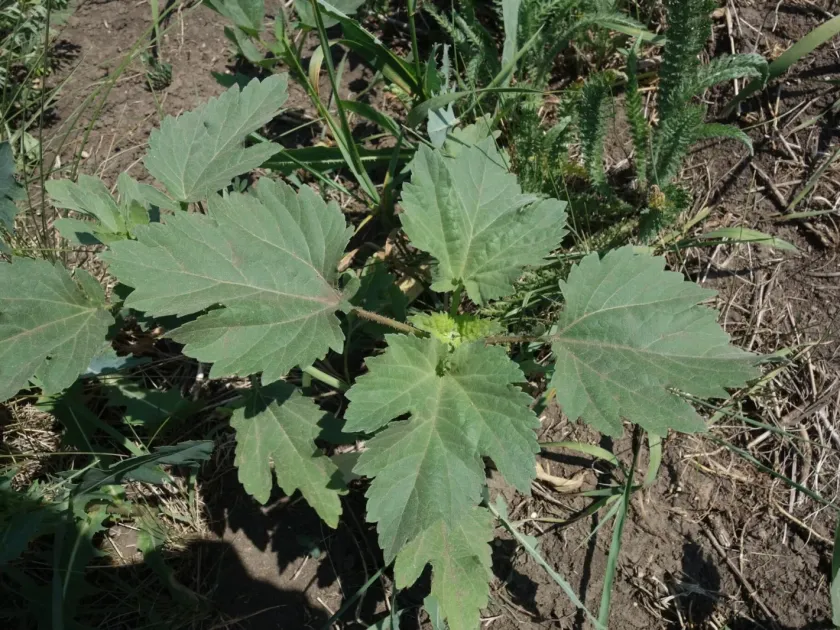
Description
Growing requirements
Rough sumpweed, scientifically known as Iva xanthiifolia, is an annual herbaceous plant belonging to the Asteraceae family, often considered a major agricultural weed.
Native to North America, the species has spread across temperate regions globally, thriving in disturbed soils, roadsides, and intensive agricultural production areas.
Botanically, it is characterized by its tall, coarse growth habit, with mature plants reaching up to 2.5 meters in height, featuring large leaves that resemble those of cocklebur.
It prefers fertile, moist, and nutrient-rich soils, which allow it to compete aggressively with row crops for light, water, and essential mineral resources.
Good agricultural management for this weed involves a combination of preventative practices, such as maintaining healthy crop canopy coverage and regular field scouting.
Main diseases and pests
Pests affecting Iva xanthiifolia include various lepidopteran larvae and beetles, though they generally provide insufficient control to stop the plant's spread in a field setting.
Pathogenic fungi like powdery mildew can impact the vigor of the weed, but they rarely eliminate the plant population in typical field environments.
The primary threat posed by this plant is its ability to produce thousands of seeds per individual, ensuring its persistence in the soil seed bank for many seasons.
Chemical control strategies typically rely on post-emergence herbicides, which are most effective when applied before the plant reaches a height of 15-20 centimeters.
Mechanical cultivation remains a standard practice, but it must be performed before the plant sets seed, as even cut stems can potentially mature and produce viable seeds.