
Poverty weed
Iva axillaris Pursh
Description
Sowing dates
Iva axillaris, commonly known as poverty weed, is a perennial herbaceous plant belonging to the Asteraceae family. In agriculture, it is recognized as a persistent and invasive weed that competes aggressively with crops.
The plant spreads primarily through an extensive system of horizontal rhizomes. These underground structures allow the plant to colonize large areas, making it extremely difficult to eradicate from farmland.
Native to North America, poverty weed has spread to various regions with temperate and arid climates. Its ability to adapt to diverse environments has allowed it to become a major pest in agricultural systems.
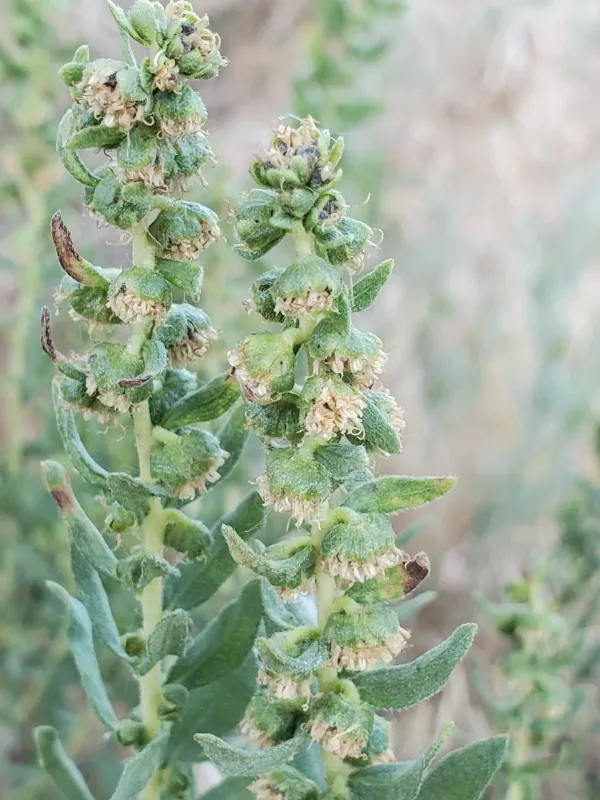
Botanically, it features upright stems that can reach up to 60 cm in height. The leaves are narrow, and the flowers are small heads located in the leaf axils, which is a distinctive morphological trait.
Due to its resilience, poverty weed is considered a quarantine concern in many regions, as it can significantly disrupt agricultural productivity and reduce total crop yields.
Growing requirements
Poverty weed is highly tolerant of adverse soil conditions. It thrives in saline and alkaline soils where many other plants struggle to survive, making it a dominant competitor in marginal lands.
Light intensity is a key factor for its development. The plant prefers open areas with full sun exposure, which fuels the rapid expansion of its underground rhizome network.
While it is drought-tolerant, the plant benefits from access to moisture in deeper soil horizons. Its deep root system allows it to withstand long periods without rainfall during the growing season.
The species exhibits high cold hardiness, surviving winter temperatures easily. This durability allows it to emerge early in the spring, gaining an advantage over germinating crops.
Agricultural management should prioritize deep tillage to break up and dehydrate the rhizomes, combined with integrated chemical control strategies to manage the regrowth of established populations.
Main diseases and pests
The primary threat posed by poverty weed is its intense competition for water and nutrients. It depletes soil resources, often leading to stunted growth and reduced grain quality in affected fields.
The plant is remarkably resistant to common pathogens. Its internal chemical composition acts as a natural deterrent against many fungi and bacteria that typically affect agricultural flora.
Natural pests provide little control over Iva axillaris populations. Its invasive nature is often attributed to the lack of natural predators in the regions where it has been introduced.
Effective management requires the application of systemic herbicides. Because the plant has a waxy leaf cuticle, adjuvants are often necessary to ensure the herbicide is absorbed by the plant tissues.
Farmers must adopt strict sanitation practices for equipment to prevent the spread of rhizome fragments to clean areas, as even small pieces can initiate new, robust infestations.