
Iseilema prostratum
Iseilema prostratum (L.) Andersson
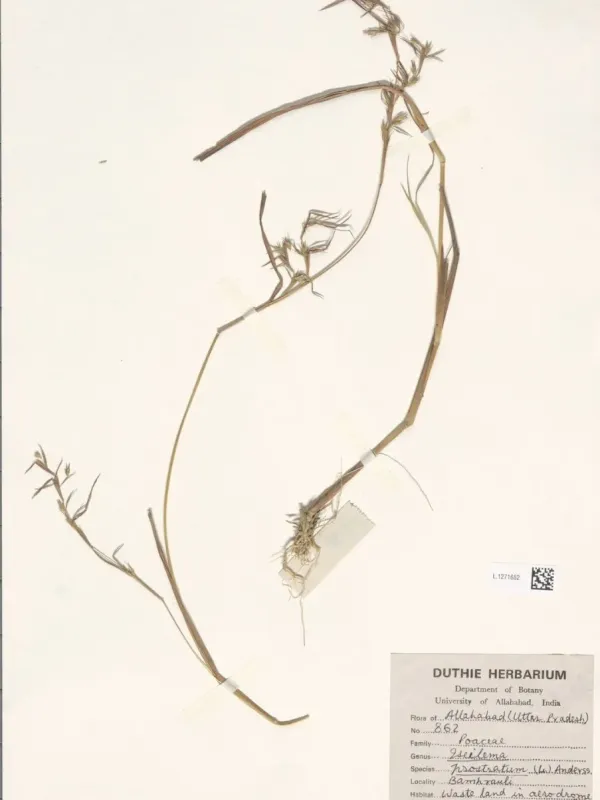
Description
Sowing dates
Iseilema prostratum, commonly known as Flinders grass in some regions, is a perennial grass species belonging to the Poaceae family. It is widely recognized for its ability to thrive in tropical and subtropical environments.
Sowing typically occurs at the onset of the rainy season. Adequate soil moisture is the primary factor for successful germination, as the seeds require consistent hydration to establish their root systems before the heat intensifies.
The sowing depth is crucial for this species; seeds should be covered with only a thin layer of soil to ensure proper light exposure and avoid suppressing the emergence of young sprouts.
Field preparation involves creating a clean, weed-free seedbed. Given the small size of the seeds, uniform distribution is necessary to achieve a dense and productive stand that can effectively compete against unwanted vegetation.
The grass is known for its quick regeneration cycle. Once established, it can spread through vegetative growth, forming a dense ground cover that protects the soil from erosion in pastoral landscapes.
Growing requirements
This species is highly photophilous and requires full sun exposure to maintain high productivity. It performs poorly in shaded areas, such as under dense tree canopies where sunlight is significantly limited.
Iseilema prostratum is well-adapted to various soil types, particularly clay-heavy soils. Its ability to tolerate waterlogging makes it superior to many other forage grasses in poorly drained areas.
Temperature plays a vital role in its growth cycle. It thrives in high-temperature conditions and possesses significant heat resistance, though its development slows down during cooler months.
The grass exhibits impressive drought resilience. When water becomes scarce, it enters a state of physiological dormancy, allowing it to survive until rainfall resumes and it can resume active growth.
Soil nutrient requirements are moderate, but the plant responds positively to nitrogen and phosphorus inputs, which can significantly enhance the yield of the green biomass in managed pasture systems.
Yield
The forage quality of this species is highly regarded, especially in the early stages of growth. It provides a balanced source of protein and essential minerals for livestock such as cattle and sheep.
Productivity is largely determined by seasonal precipitation. In years with sufficient rainfall, it can produce multiple cuts or support high stocking rates without showing signs of stress or exhaustion.
The plant is highly palatable even when mature. This characteristic ensures that livestock consume the forage efficiently, resulting in better weight gains and overall health for the grazing animals.
Seed yield is often a secondary objective in commercial cultivation. To ensure high-quality seeds, farmers often designate specific areas for seed production, restricting grazing during the maturation phase.
Research confirms that sustainable management of the grazing pressure leads to a long lifespan for the stand, maintaining consistent biomass production for many consecutive growing seasons.
Main diseases and pests
Fungal diseases like rusts and smuts are common threats under high-humidity conditions. These pathogens can affect the quality of the foliage and significantly reduce the overall biomass yield of the stand.
Insect pests, particularly locusts and various grasshopper species, pose a constant danger to the foliage. Monitoring programs are essential to detect and manage infestations before they cause severe damage.
Root-knot nematodes can occasionally affect the plant in monoculture systems. Crop rotation and maintaining soil health are effective strategies for minimizing the risk of subterranean pest proliferation.
Early-stage weed competition is a significant threat that can hinder the development of young plants. Timely mechanical weeding or selective herbicide application is necessary to provide the grass with a head start.
Integrated pest management (IPM) practices, including biological control agents and resistant cultivars, are recommended to maintain the ecological balance of the pastures and protect the crop effectively.
Harvesting
For hay production, the optimal harvest time is at the beginning of the flowering phase. This ensures the best nutritional value, as protein levels are highest just before the plant directs energy to seed production.
Harvesting techniques include mechanical mowing followed by careful drying. It is important to avoid over-drying the forage to prevent the loss of leaves, which are the most nutrient-dense part of the plant.
Seed harvesting requires precision. Because the seeds can shatter easily upon reaching maturity, monitoring the moisture content and color of the seed heads is critical to maximizing harvest volumes.
After harvest, post-processing involves winnowing or cleaning the seeds to remove debris. Storing seeds in a cool, dry environment is essential to maintain viability for future planting seasons.
Proper harvest management encourages rapid regrowth of the grass. By avoiding over-harvesting, farmers can ensure that the plant retains enough energy reserves for long-term health and consistent yearly yield.