
Iris stenophylla
Iris stenophylla
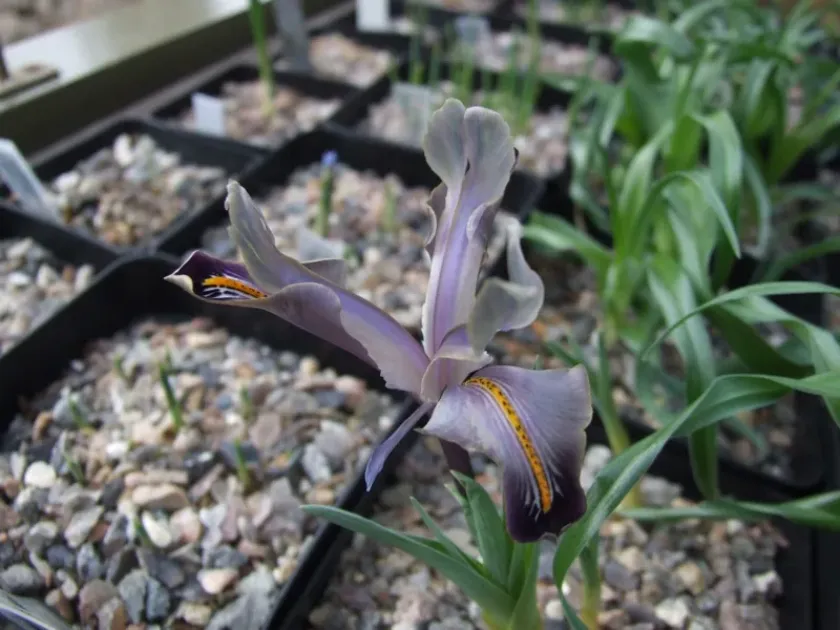
Description
Growing requirements
Iris stenophylla is a perennial plant belonging to the Iridaceae family. Native to the rocky mountainous landscapes of Turkey, this species has adapted to extreme temperature fluctuations and prefers arid, well-drained environments.
The plant exhibits a compact growth habit with slender leaves, which are characteristic of its specific botanical lineage. As a spring-flowering bulbous-like plant, it relies on its rhizome to store energy, allowing for early blooms when conditions are suitable.
Soil requirements are strict: the substrate must be highly permeable to prevent water retention. A sandy or gravelly soil mix is ideal for maintaining the plant's health and preventing root rot. The pH should be neutral or slightly alkaline.
Regarding climate, the plant requires a dormant period with minimal moisture after the flowering season. It thrives in open, sunny locations where it receives maximum light, which is crucial for the photosynthesis of the foliage before it dies back.
Agrotechnical management focuses on avoiding over-irrigation. Proper site selection in raised beds or rock gardens is recommended to provide the necessary aeration for the root system, which is susceptible to hypoxia in dense, water-logged soils.
Main diseases and pests
The primary threats to Iris stenophylla are fungal pathogens caused by excessive humidity. Fusarium and other soft rot fungi are common, particularly if drainage systems fail or during periods of unseasonable rainfall.
Pests such as iris borers can cause significant structural damage to the rhizomes. These larvae tunnel through the plant, making it prone to opportunistic bacterial infections that can destroy entire clumps if not treated early.
Thrips represent another significant challenge, as they cause necrotic spots on the leaves and can stunt the overall growth of the plant. Monitoring and timely application of specialized pesticides are necessary for maintaining visual and biological quality.
Effective management includes preventative measures such as thinning out plantings to improve airflow and solar penetration. Removing debris in late autumn helps reduce the potential host sites for pests and pathogens during the winter months.
Chemical control should be used judiciously, prioritizing products that are specific to the identified pest while maintaining the balance of the local soil microflora to ensure long-term sustainability of the planting site.