
Blood iris
Iris sanguinea
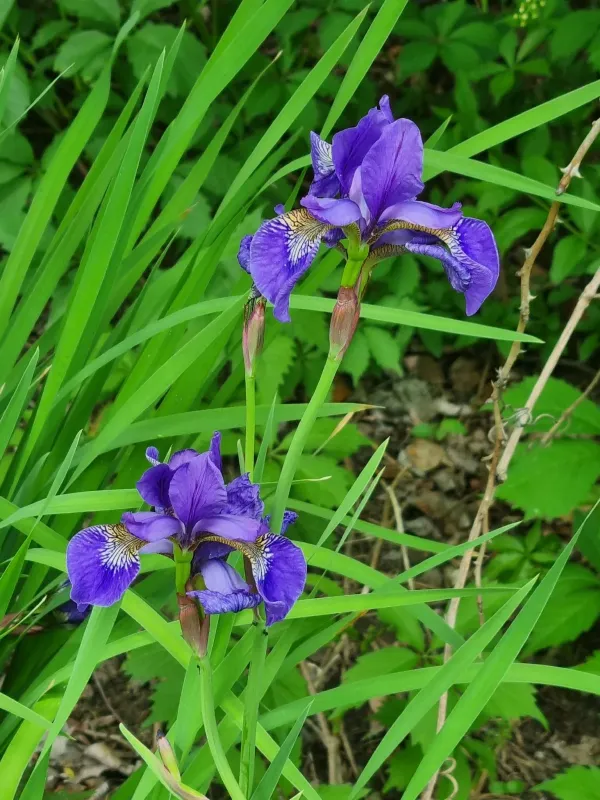
Description
Sowing dates
Sowing seeds of the blood iris is typically performed in late autumn, immediately after collection, which ensures natural stratification in the soil. If spring sowing is planned, seeds require mandatory preliminary stratification for 1–2 months under low positive temperatures.
Seeds should be sown at a depth of approximately 1.5–2 cm in light, fertile substrate. An optimal temperature range for germination is between 15 and 20 degrees Celsius.
Seedlings emerge rather slowly and unevenly, so maintaining constant soil moisture in the seed layer is crucial. Once two true leaves develop, the seedlings should be pricked out for further development in a nursery bed.
Young blood iris plants grow slowly, and full-scale flowering usually occurs in the third or fourth year after sowing.
Vegetative propagation by dividing rhizomes is considered a more efficient method, as it allows for faster maturation of specimens and preserves the varietal traits of the parent plant.
Growing requirements
The blood iris belongs to the Iridaceae family and is a perennial herbaceous plant featuring a sturdy rhizome. Native to the Far East, Korea, Japan, and Northern China, it naturally inhabits well-lit, moist meadows and forest margins.
The plant prefers moderately moist, loamy, or sandy-loamy soils with a neutral or slightly acidic pH. An essential condition for successful growth is good drainage, as water stagnation in the rhizome zone leads to root rot.
This species is highly photophilous; therefore, to ensure intense flowering, sites open to sunlight for most of the day must be selected. When planted in shade, the plant becomes leggy, and flower stalks lose their structural integrity.
Iris sanguinea is characterized by high winter hardiness, typical of species from the Far Eastern regions. It does not require additional winter protection in temperate climates.
During the active growth and bud formation phase, the plant requires regular irrigation, especially during dry spells. Applying mineral fertilizers in the spring promotes profuse flowering and strengthens the root system.
Main diseases and pests
The most dangerous disease for the blood iris is bacterial soft rot of the rhizomes. When affected, the rhizome tissue softens and emits a foul odor, a condition often triggered by excessive soil moisture.
Fungal diseases, such as heterosporiosis, manifest as dark spots on the leaves that gradually enlarge. To prevent these infections, it is recommended to timely remove dry plant debris in the autumn.
Among pests, the iris fly can cause significant damage to plantings, as its larvae feed on buds, preventing normal flowering. It is necessary to inspect plants early in the flower stalk formation stage.
Aphids and thrips can also attack the aerial parts of the plant, sucking sap from the leaves and weakening the bush. If pests are detected, the use of systemic insecticides is recommended.
To prevent the spread of diseases, it is important to maintain proper spacing when planting to ensure effective air circulation between the bushes and reduce humidity in the root zone.