
Iphigenia ledermannii
Iphigenia ledermannii
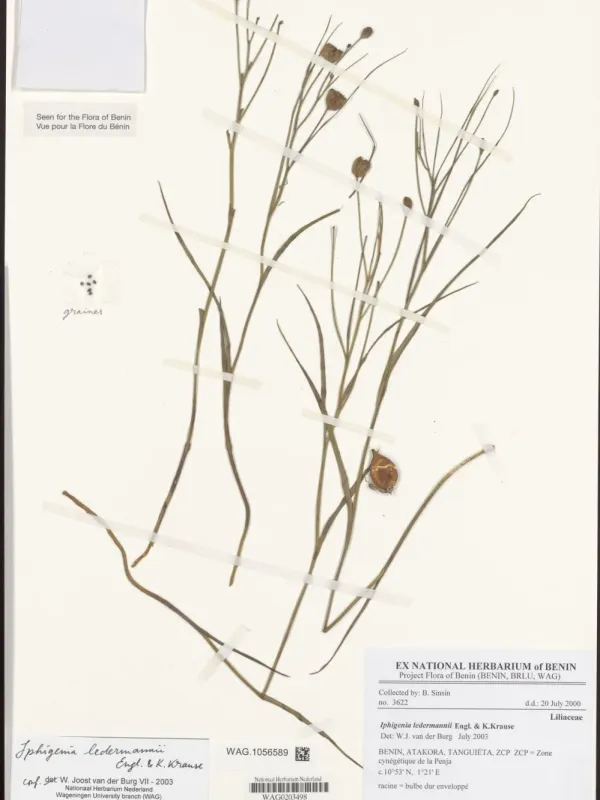
Description
Sowing dates
Iphigenia ledermannii is a tuberous perennial herb belonging to the Colchicaceae family, known for its specific ecological niche.
In its native habitat, the life cycle is strictly synchronized with tropical seasons, alternating between active growth and dormancy.
Cultivation requires planting in a well-draining, airy substrate that mimics the sandy soils of tropical savannas.
Sowing or planting usually occurs as the climate shifts toward the wet season, providing the necessary moisture for root development.
Proper placement of the tubers at an optimal depth is crucial to prevent early rot and ensure successful emergence of shoots.
Growing requirements
This species demands bright, filtered sunlight; direct exposure to intense midday sun can lead to leaf scorching and physiological stress.
The ideal temperature range for active vegetation is between 22 and 28 degrees Celsius, reflecting its tropical origins.
Soil composition should lean towards neutrality or slight acidity, with high aeration levels to facilitate healthy root respiration.
Watering must be carefully regulated: during the growing season, moisture should be consistent but never waterlogged.
During the dormant period, the soil must be kept almost completely dry to prevent fungal outbreaks in the dormant tubers.
Yield
As a specialized botanical species, Iphigenia ledermannii is not cultivated for mass production but holds high value in research collections.
Productivity is measured by the number of healthy daughter tubers produced per cycle and the vigor of the seasonal foliage.
Optimal nutrition during the active growth phase significantly improves the bulb size and subsequent floral output.
Successful reproduction relies on maintaining a stable environment, which minimizes stress and encourages bulb division.
Collectors prioritize the health and longevity of the plant over rapid proliferation, often using refined propagation methods.
Main diseases and pests
The primary threats to this plant involve various soil-borne pathogens, particularly fungi that thrive in stagnant water conditions.
Common pests such as spider mites may occur if the ambient humidity drops significantly below the required levels for long periods.
Rot of the bulb tissue is the most common cause of plant mortality, often stemming from poor drainage or overwatering mistakes.
Proactive management of the growing environment, including sterilization of substrate components, is highly recommended.
Regular monitoring for leaf spots or stunted growth helps in identifying and treating viral or bacterial infections early.
Harvesting
Harvesting bulbs is strictly performed after the foliage has naturally yellowed and died back, marking the end of the growth phase.
Carefully lifting the tubers from the substrate allows for inspection of health and removal of any diseased sections.
Storage requires a cool, dry, and dark environment with sufficient airflow to maintain bulb dormancy without desiccation.
Careful cleaning of the bulb surface, removing loose soil and old roots, prepares the plant for safe winter or dry-season storage.
Labeling and organized storage of the harvested tubers ensure high success rates for the next cycle of cultivation.