
Indigofera truxillensis
Indigofera truxillensis
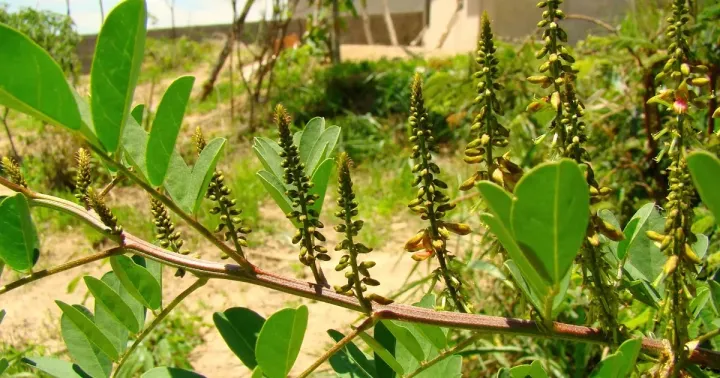
Description
Sowing dates
Indigofera truxillensis is a perennial shrub belonging to the Fabaceae family. Planting should occur at the onset of the wet season, as the seeds require sufficient soil moisture to initiate germination after a dormant period.
Mechanical scarification of the seeds is highly recommended before sowing to break the physical dormancy of the seed coat. This significantly improves the uniformity of field emergence.
The optimal sowing depth is shallow, ranging between 2 to 3 centimeters. Proper soil-to-seed contact is essential to facilitate water absorption and promote early development of the taproot.
Spacing between rows should be maintained at 50 to 70 centimeters. This distance is necessary to reduce inter-plant competition for soil nutrients and to ensure adequate sunlight penetration for each shrub.
Seedbed preparation should involve light cultivation to remove competing weeds, which can easily overwhelm young Indigofera seedlings during their initial establishment phase.
Growing requirements
This species thrives in tropical and subtropical climates. It displays optimal growth performance within a temperature range of 22 to 30 degrees Celsius, preferring sunny locations throughout the growing season.
Well-drained soils, specifically sandy loams, are most suitable for this crop. Indigofera truxillensis is highly sensitive to waterlogging, and poor drainage will rapidly lead to root decay and yield loss.
The plant is known for its remarkable drought tolerance. Once established, it can withstand prolonged dry spells by dropping leaves and slowing physiological activity until water becomes available again.
Soil fertility requirements are relatively low, as the plant engages in symbiotic nitrogen fixation. This characteristic allows it to grow in marginal soils while concurrently improving soil nitrogen levels.
Exposure to full sunlight is essential for biomass production. Planting in shade-covered areas is strongly discouraged as it results in stunted growth and increased susceptibility to opportunistic pathogens.
Main diseases and pests
Root rot caused by fungal pathogens in waterlogged soils is the most significant threat to plant health. Ensuring proper drainage is the primary defense strategy for commercial cultivation.
Foliar pests, such as spider mites and various lepidopteran larvae, can cause significant leaf damage. Regular field scouting is necessary to identify outbreaks before they impact total biomass yields.
Fungal diseases like leaf spot often appear under high humidity conditions. Implementing wider row spacing helps increase air circulation and reduces the micro-climatic humidity favorable to fungi.
Nematode infestations may occur in intensive production systems. Long-term management should include crop rotation schedules that incorporate non-leguminous species to break the pest cycle.
Weed control in the early stages is crucial because young Indigofera plants are slow to develop canopy closure. Manual or mechanical weeding during the first two months is vital for long-term success.