
Indigofera hochstetteri
Indigofera hochstetteri
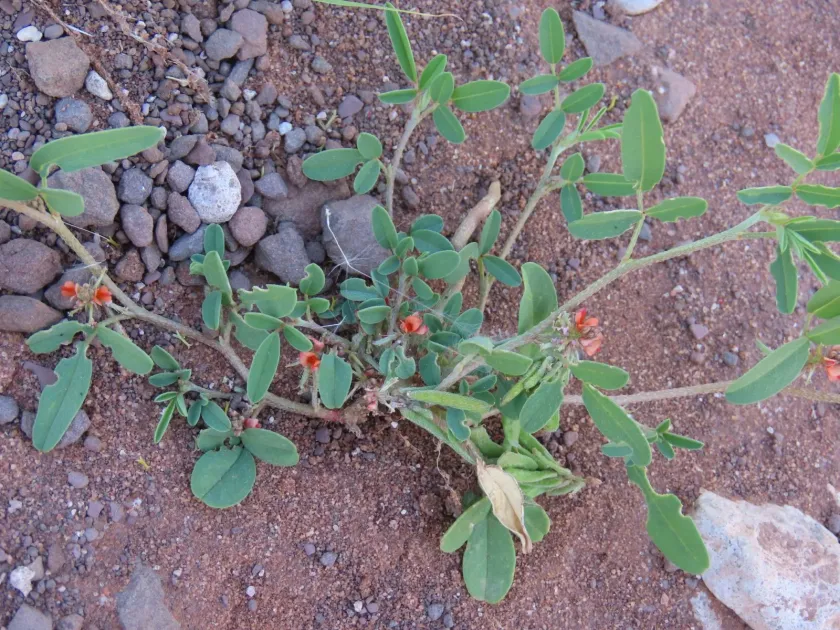
Description
Sowing dates
Indigofera hochstetteri is an annual herbaceous plant belonging to the Fabaceae family, commonly found as part of the natural flora in arid environments. In agricultural practice, sowing is typically carried out at the beginning of the rainy season to ensure optimal soil moisture for seed germination.
The sowing technique involves shallow placement of seeds in well-prepared soil, given the small seed size. The ideal soil temperature for active growth ranges between 25 and 30 degrees Celsius.
An important factor during sowing is maintaining proper plant spacing, as Indigofera exhibits significant branching if given sufficient space. In its native regions, it is often sown both in pure stands and in mixtures with drought-resistant grasses.
The seeds of this crop have a hard coat; therefore, scarification is often recommended in commercial farming to improve field emergence rates.
Indigofera is characterized by a rapid initial growth phase, which allows it to cover the soil surface quickly and suppress weed competition during the early stages of development.
Growing requirements
The plant has moderate soil fertility requirements, performing exceptionally well in sandy and loamy-sand soils with low organic matter content. It is a true xerophyte, perfectly adapted to environments with limited water availability.
Indigofera hochstetteri requires full sun for optimal development, as any shade significantly reduces both vegetative biomass and overall seed yield.
A key agronomic advantage of this crop is its ability to form symbiotic relationships with nitrogen-fixing root nodules, which enriches the soil and improves its physical structure.
The plant possesses high heat resistance and can endure prolonged periods of drought thanks to its deep-reaching taproot system that taps into deeper moisture profiles.
It is not sensitive to soil pH levels, thriving in slightly acidic to neutral and moderately alkaline soils, making it an excellent candidate for pasture improvement programs.
Main diseases and pests
The main threat to Indigofera is soil-borne nematodes, which can attack the root system during the first few weeks of growth, significantly stunting the plant's development.
In high humidity conditions combined with poor ventilation, the crop may suffer from fungal diseases such as powdery mildew, which often leads to premature leaf drop.
Among pests, weevils are notable for feeding on the cotyledons of young seedlings, which may require prompt insecticidal intervention in severe infestation cases.
Leaf spot diseases, caused by pathogens in the genus Cercospora, may occur when high temperatures coincide with intermittent rainfall, damaging the foliage and reducing photosynthetic area.
To minimize phytosanitary risks, it is strongly advised to follow a crop rotation system that avoids planting legumes on the same plot for several consecutive years.