
Franchet holly
Ilex franchetiana
Description
Growing requirements
Franchet holly (Ilex franchetiana) is an evergreen shrub or small tree belonging to the Aquifoliaceae family. This plant is known for its slow growth rate and dense foliage, making it a valuable asset in professional landscape design.
Native to the mountainous regions of China, this species thrives in moist, fertile, well-drained soils with a slightly acidic pH. For optimal development, the plant requires protection from drying winds and direct, harsh midday sun.
The plant exhibits moderate cold hardiness; in regions with harsh winters, covering the root zone is necessary. Ideally, it requires high ambient humidity, which mimics the natural forest climate of its native habitat.
Cultivation practices involve regular irrigation during dry spells and essential mulching to retain soil moisture and stabilize root temperatures. Pruning should be performed in early spring to shape the canopy and remove any damaged branches.
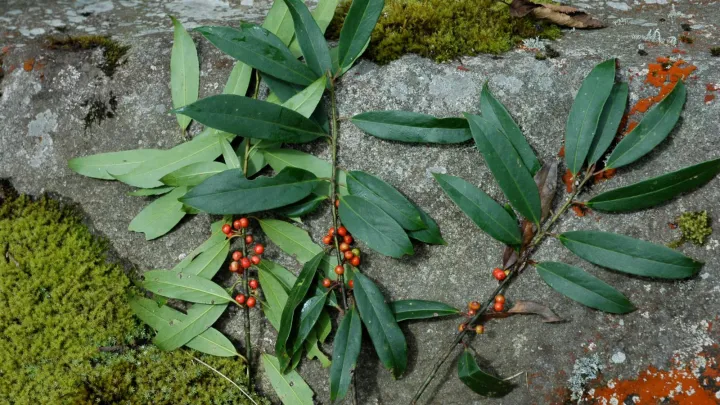
Its primary economic and practical use is in ornamental horticulture. The holly is prized for its glossy, leathery leaves and vibrant berries, which often remain on the branches well into deep winter, providing a natural food source for birds.
Main diseases and pests
The most common pests include scale insects and soft scales, which sap nutrients from the leaves. Systemic insecticides are recommended for control during the active growing season.
Fungal diseases, such as leaf spot and powdery mildew, are frequently observed. These conditions often develop due to excessive moisture retention and poor air circulation within the plant canopy.
Preventive measures include timely thinning of the branches to improve air circulation. It is also crucial to avoid waterlogging the soil to prevent the development of root rots.
To maintain plant health, it is recommended to apply copper-based fungicides at the beginning of the growing season. Weakened plants are more susceptible to pathogens, emphasizing the need for balanced fertilization.
When dealing with pest infestations, it is important to treat not only the plant itself but also the surrounding soil area, as many insects overwinter in the soil or under plant debris.