
Ciliospinosa holly
Ilex ciliospinosa
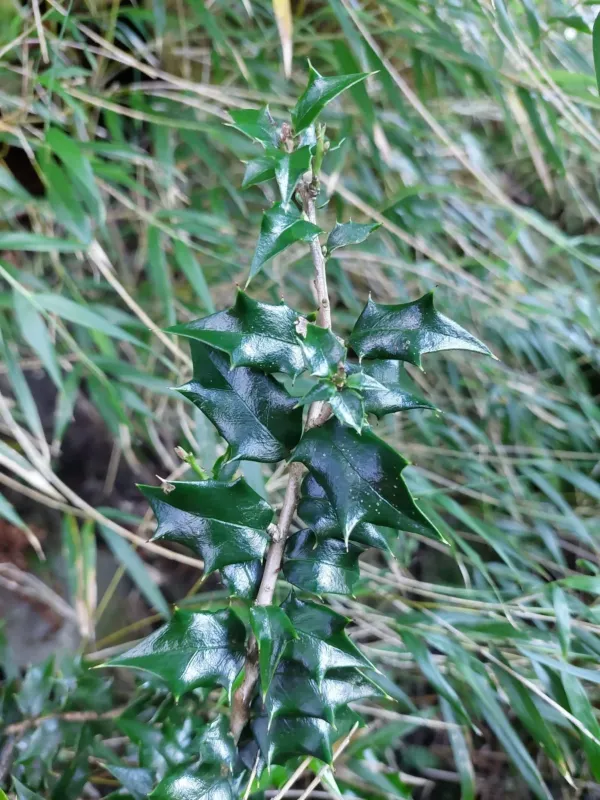
Description
Growing requirements
The Ilex ciliospinosa, commonly known as Ciliospinosa holly, is a distinctive member of the Aquifoliaceae family. It originates from the mountain forest regions of central and western China.
This evergreen shrub thrives in well-drained, acidic to neutral soils. It exhibits the best growth performance in semi-shaded environments, avoiding the scorching heat of direct midday sun.
Climate requirements include protection from severe frost and drying winds. While somewhat hardy, it benefits significantly from mulch applications that regulate soil moisture and root temperature.
The agrotechnical management of this plant focuses on maintaining consistent soil moisture and providing periodic organic amendments to support healthy foliage development.
Horticulturally, it is utilized as an ornamental specimen in gardens and landscapes. It is valued for its unique leaf morphology and the bright red berries that provide seasonal interest during autumn and winter months.
Main diseases and pests
Common pathological threats include leaf spot diseases and root rot, often triggered by poor drainage or prolonged periods of excessive humidity around the root zone.
Pests such as scale insects and aphids frequently target the plant, feeding on sap and potentially leading to the formation of sooty mold on the foliage.
Environmental stress, particularly sudden drops in temperature combined with moisture loss, can result in leaf scorching or necrosis of the younger branches.
Effective management strategies involve monitoring the plant density and ensuring sufficient airflow, which drastically reduces the risk of fungal outbreaks.
In cases of severe infestation, targeted application of horticultural oils or systemic insecticides may be required to protect the aesthetic integrity of the shrub.