
Ifloga spicata
Ifloga spicata
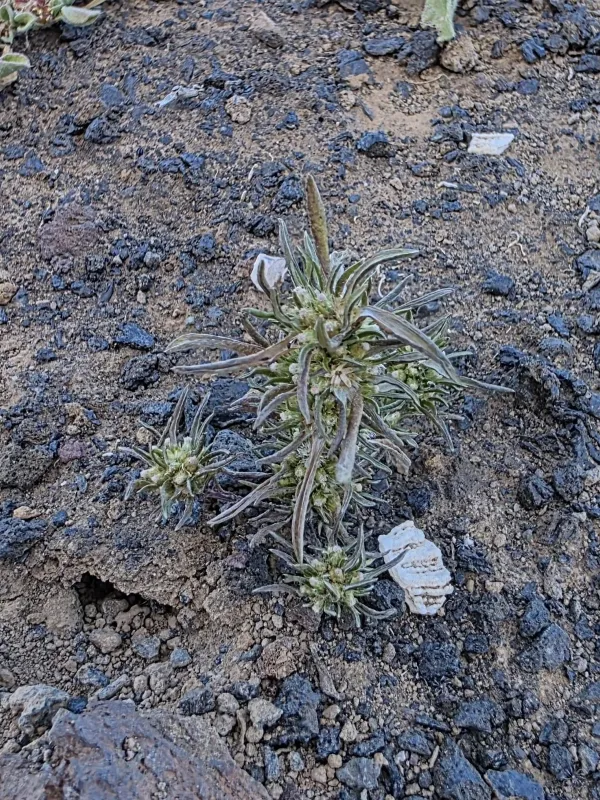
Description
Sowing dates
Ifloga spicata is an ephemeral plant, and its sowing window is strictly governed by the onset of seasonal rains in arid regions.
In a controlled agricultural setting, sowing is performed in late autumn or early winter to mirror natural germination cycles.
The seeds of this species are adapted to remain dormant in the soil bank, germinating only when sufficient moisture levels are achieved.
Minimal depth for sowing is recommended, as the seeds often require exposure to light and temperature fluctuations to break dormancy.
Uniform stand establishment is best achieved by mimicking natural cooling periods to prepare the seeds for optimal germination.
Growing requirements
This member of the Asteraceae family is natively adapted to harsh, sandy, and stony environments typical of northern Africa and the Middle East.
Ifloga spicata functions best in well-drained, nutrient-poor substrates, as it is highly susceptible to root damage from waterlogging.
High solar radiation and significant temperature variations between day and night are essential environmental conditions for healthy growth.
The crop does not tolerate high levels of humidity or dense soil structures that restrict oxygen movement around the root zone.
Agricultural management should prioritize minimal soil disturbance to preserve the fragile topsoil structure which the plant has evolved to occupy.
Yield
Yield estimation for Ifloga spicata focuses on the production of dry herbal biomass, which is highly valued for pharmaceutical applications.
Total yield is inherently dependent on climatic performance, specifically the regularity of rainfall during the primary growth cycle.
Small-scale production efforts show that biomass production can be optimized through selective cultivation techniques that avoid overcrowding.
In regions with low precipitation, irrigation must be applied sparingly to ensure plants do not lose their phytochemical potency.
Sustainable harvest practices are essential, as the species relies on its own seed bank for successful population renewal in subsequent seasons.
Main diseases and pests
Fungal pathogens represent the most significant threat, particularly when local humidity exceeds the plant's tolerance threshold.
Root rot is a major issue in commercial cultivation if irrigation schedules are not strictly calibrated to the drainage capacity of the soil.
Various insect pests, including mites and desert beetles, can significantly reduce foliage density during extended drought periods.
Competition from more aggressive, invasive annual grasses can completely overwhelm Ifloga spicata populations if not managed early.
- High susceptibility to powdery mildew in humid conditions.
- Infestation by soil-borne larvae.
- Suppression by faster-growing competitive weed species.
Harvesting
Harvesting is typically timed during the early flowering phase, ensuring that the concentration of active medicinal compounds is at its peak.
Harvesting must occur under dry conditions to prevent raw material degradation and potential fungal development during the drying process.
Selective manual harvesting is preferred over mechanical methods to ensure only mature specimens are removed, preserving the local population.
Drying should be conducted in shaded, well-ventilated areas to protect the delicate aerial parts from ultraviolet radiation and heat damage.
Proper storage involves breathable containers that allow air circulation while preventing pests and moisture ingress during long-term storage.