
Catsear
Hypochaeris radicata L.
Description
Sowing dates
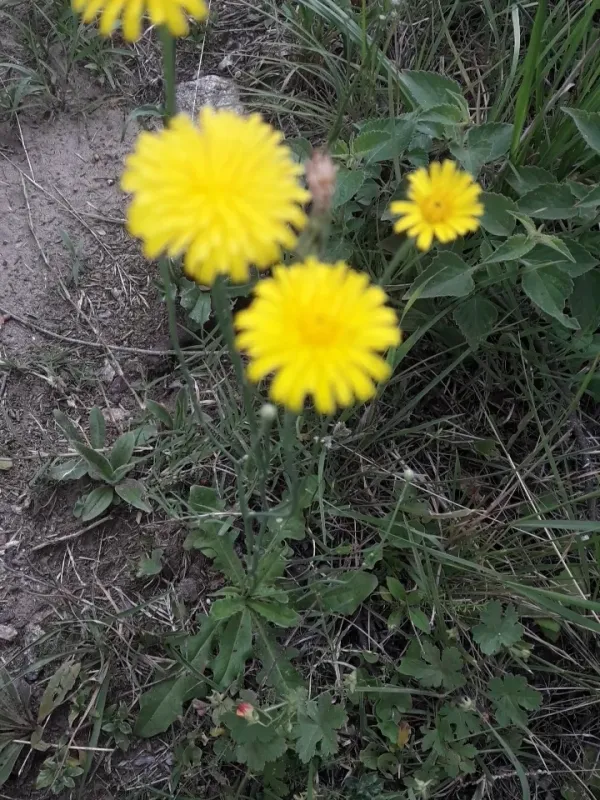
Catsear (Hypochaeris radicata L.) is a perennial herb belonging to the Asteraceae family. It typically forms a basal rosette of leaves, from which flowering stems emerge, mimicking the appearance of dandelions but with distinct branching.
In agricultural systems, it is generally considered a weed of pastures and lawns. Its reproductive success relies on wind-dispersed seeds, which feature a pappus that allows them to travel long distances, colonizing diverse habitats effectively.
Seeds are capable of germinating throughout the growing season provided there is sufficient soil moisture. Early spring is the most active period for seedling establishment, as warming temperatures favor rapid development of the root system.
The plant possesses a significant taproot that stores energy, allowing it to survive harsh conditions and regenerate after mechanical disturbances. This biological feature makes it a persistent plant in various agricultural landscapes.
Its life cycle is adapted to survive grazing and mowing, which are common practices in grassland management. By maintaining a low-profile rosette, it remains shielded from many common agricultural interventions.
Growing requirements
Catsear thrives in well-lit environments but possesses moderate shade tolerance. It is highly adaptable to a wide range of soil types, including sandy, acidic, and nutritionally poor soils where other competitive species may struggle.
Climate requirements for Hypochaeris radicata are relatively broad, as it is native to Europe but has successfully naturalized globally in temperate regions. It prefers moist conditions but shows remarkable resilience during dry spells due to its deep taproot.
Soil structure plays a role in its establishment, as it prefers disturbed ground with some level of aeration. However, it can establish itself in compacted soils as well, provided there is enough moisture to support its initial growth phases.
The plant is highly frost-tolerant, over-wintering as a green rosette. This resilience allows it to start photosynthesis as soon as the temperature rises above freezing, giving it a competitive advantage over summer-annual species.
Management of its environment requires consistent practices to reduce population density. While it prefers nitrogen-limited soils, it can capitalize on high-fertility areas if the ground cover is disturbed or degraded.
Main diseases and pests
Like many members of the Asteraceae family, Catsear is susceptible to various fungal pathogens, including powdery mildew and rusts. These diseases can stress the plant, although they rarely lead to total eradication of a population.
Insect pests, such as aphids and spider mites, can damage the leaves and reproductive structures. While these pests impact the overall health of the plant, they often serve as natural regulators in undisturbed ecosystems.
Chemical control is the most effective method for large-scale management. Herbicides utilizing 2,4-D or other selective broad-leaf compounds are commonly used to target the rosette without damaging the surrounding grass.
Mechanical control, such as manual digging, is effective if the entire taproot is removed. If the root is cut too shallowly, the plant will likely resprout, making surface-level mowing an ineffective control measure for established plants.
- Selective herbicide application during the rosette stage.
- Maintaining high pasture density to outcompete seedlings.
- Deep cultivation to disrupt the taproot development.
- Ensuring timely removal of plants before seed head maturity.