
Hyparrhenia rufa
Hyparrhenia rufa (Nees) Stapf
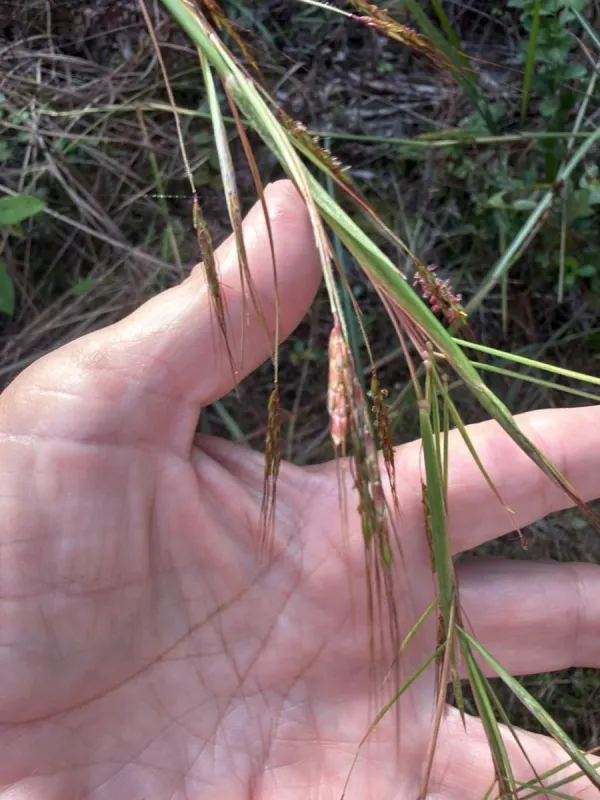
Description
Sowing dates
Planting of Hyparrhenia rufa should occur at the start of the rainy season to ensure adequate moisture for seed germination and initial establishment. This species has a relatively slow seedling growth phase.
Seeding rates depend on the sowing method, but typically the seeds are broadcasted on the soil surface and lightly rolled. This ensures the necessary contact with the soil for effective germination.
It is recommended to clean seeds by removing the awns to improve flowability and ensure a more uniform distribution across the field. This simplifies the planting process significantly.
Field preparation is crucial, as the seedlings are weak competitors against weeds during the first weeks. Clearing the land of weeds prior to planting is a standard management practice.
Applying starter fertilizers during the planting process helps stimulate root development, allowing the plant to transition into the rapid growth phase more effectively.
Growing requirements
Hyparrhenia rufa is a perennial grass of the Poaceae family, widely distributed in tropical regions. It thrives in climates with a distinct alternation between wet and dry seasons.
The plant requires full sun exposure for optimal growth and does not perform well in heavily shaded areas. It favors temperatures ranging from 20 to 30 degrees Celsius for maximum vegetative activity.
Well-drained soils are essential for this species. While it can tolerate short-term flooding, prolonged waterlogging often leads to root rot, which negatively impacts overall productivity.
Its deep root system provides excellent drought tolerance, allowing it to remain productive even when rainfall is irregular. This makes it a staple for tropical grazing systems.
The grass is highly responsive to nitrogen fertilization, which significantly increases biomass production. Proper nutrient management is key to maintaining a high-quality pasture.
Yield
Under favorable conditions, Hyparrhenia rufa can yield between 15 to 25 tonnes of green matter per hectare. The total output largely depends on soil fertility and seasonal rainfall.
Nutritional value is at its peak before the onset of flowering. During this period, the plant contains optimal levels of protein and digestible energy, supporting healthy livestock weight gain.
When used for hay production, it can yield 5–8 tonnes per hectare in two cuttings. Mowing must be timed correctly to prevent the stems from becoming too lignified and tough for cattle.
The grass shows rapid regrowth after defoliation, making it suitable for rotational grazing. This management strategy allows for maximizing forage availability throughout the season.
Silage production is also a viable option to preserve excess biomass. If cut at the right stage, the high carbohydrate content facilitates efficient fermentation and long-term storage.
Main diseases and pests
Hyparrhenia rufa is generally resistant to most common grass diseases. Serious outbreaks are rare, provided the plant is grown in suitable soil conditions without extreme waterlogging.
Pest issues are mainly related to lepidopteran larvae, such as armyworms, which can cause leaf damage. However, these infestations are typically managed through proper pasture rotation.
Root pathogens may appear in compacted or poorly drained soils. The best preventive measure is ensuring adequate soil drainage and avoiding overgrazing during wet periods.
Weed interference is primarily a concern during the establishment year. Once the stand is fully developed, its dense root and foliage network effectively suppresses competing vegetation.
While some soil nematodes can affect the root system, the vigorous growth habit of this grass allows it to maintain its productivity despite occasional pest pressure.
Harvesting
Hay harvest should be conducted at the early flowering stage to balance total yield with forage quality. Delaying the harvest results in higher fiber content and lower digestibility.
The recommended mowing height is 10–15 cm. This allows the plant to preserve energy reserves in the crown, which are vital for quick regrowth of the next cycle.
Drying the harvested grass is efficient in tropical climates. It is important to monitor the moisture level before baling to prevent spoilage or heating within the hay bales.
In grazing systems, implementing a rotational approach prevents overgrazing and encourages uniform forage removal. This keeps the grass in a nutritious state for longer periods.
Seed harvesting should occur once the seed heads have matured and turned brown. Prompt collection is necessary as the seeds are prone to shedding once they are fully ripe.