
Hyparrhenia hirta
Hyparrhenia hirta (L.) Stapf
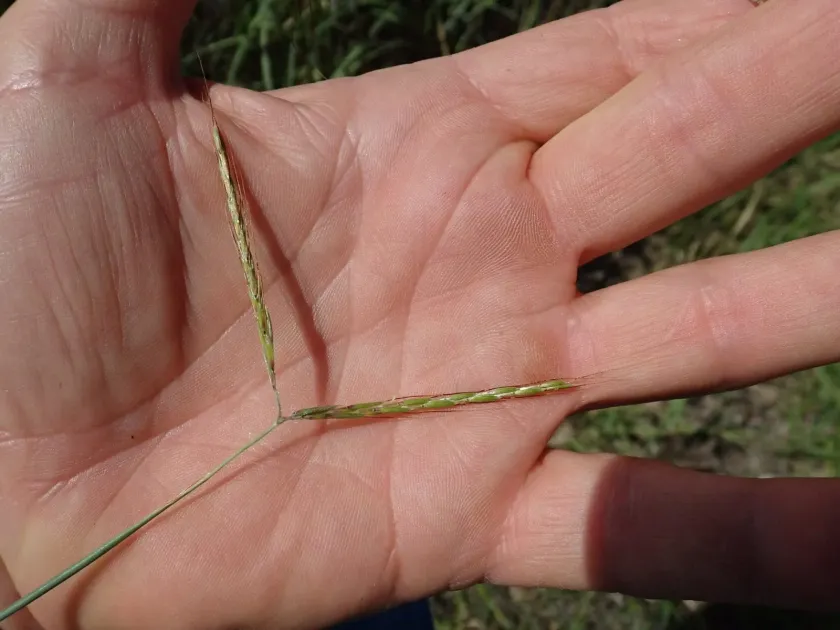
Description
Growing requirements
Hyparrhenia hirta, commonly known as common thatch grass, is a perennial grass belonging to the family Poaceae. Native to the Mediterranean, Africa, and parts of Asia, it is well-regarded for its extreme adaptability to diverse environmental conditions.
This grass thrives in full sunlight and is primarily found in open savannas, dry grasslands, and rocky slopes. It demonstrates significant drought resistance, making it an ideal candidate for cultivation in arid regions where irrigation resources are limited.
Soil requirements for Hyparrhenia hirta are relatively modest. It performs well in poor, sandy, or stony soils and is notably tolerant of slightly acidic to alkaline pH levels. Adequate drainage is essential to prevent root rot, as the plant is sensitive to waterlogged environments.
The climate requirement is primarily tropical or warm-temperate. While the plant can survive short periods of cooling, prolonged frost can severely damage its vegetative organs. Consistent warmth throughout the growing season is the key to achieving optimal biomass production.
Establishment of this crop usually begins from seed or division of established clumps. Given its aggressive root growth, once it establishes a foothold, it can effectively protect soil surfaces from wind and water erosion, making it useful in reclamation projects.
Yield
As a forage crop, Hyparrhenia hirta is valued for its resilience under grazing pressure. It provides a reliable source of green matter in regions where more sensitive grasses fail to survive the summer heat.
The nutritional quality of the grass is highest during the vegetative stage. As the plant transitions into the flowering phase, the levels of crude fiber increase significantly, which can decrease digestibility for livestock.
Management of the pasture through controlled grazing or rotational mowing is essential to maximize yield. By cutting the grass before it fully matures, producers can ensure the production of younger, more palatable, and nutrient-rich forage.
In well-managed systems, the species can produce multiple harvests per season if moisture conditions allow. The ability to regrow rapidly after disturbance makes it a highly sustainable component of a pastoral farming system.
Beyond forage, the biomass of Hyparrhenia hirta has historically been used for thatch in rural construction, highlighting its structural properties. Its resilience and utility make it an important species for integrated land management.
Main diseases and pests
One of the significant advantages of Hyparrhenia hirta in agricultural settings is its low susceptibility to diseases. It rarely falls victim to common fungal pathogens, partly because its preferred dry habitats discourage mold and mildew development.
Pest pressures are generally low. Occasionally, grass-feeding insects might cause minor damage, but the plant's robust growth rate allows it to compensate for lost foliage rapidly without requiring chemical interventions.
The primary threat to the stability of Hyparrhenia hirta stands is improper management, specifically overgrazing. Continuous grazing prevents the plant from replenishing its energy reserves in the roots, eventually leading to thin, unproductive stands.
Invasion by more aggressive weeds can happen in the seedling stage, but once the cluster is established, the grass is highly competitive. Proper seedbed preparation and initial weed control during the first weeks of growth are usually sufficient to ensure a clean field.
Prevention of stand degradation relies on regular monitoring and resting periods. If a stand shows signs of exhaustion, allowing it to go to seed once every few years can help maintain the density and long-term viability of the pasture.