
Burrobrush
Hymenoclea monogyra
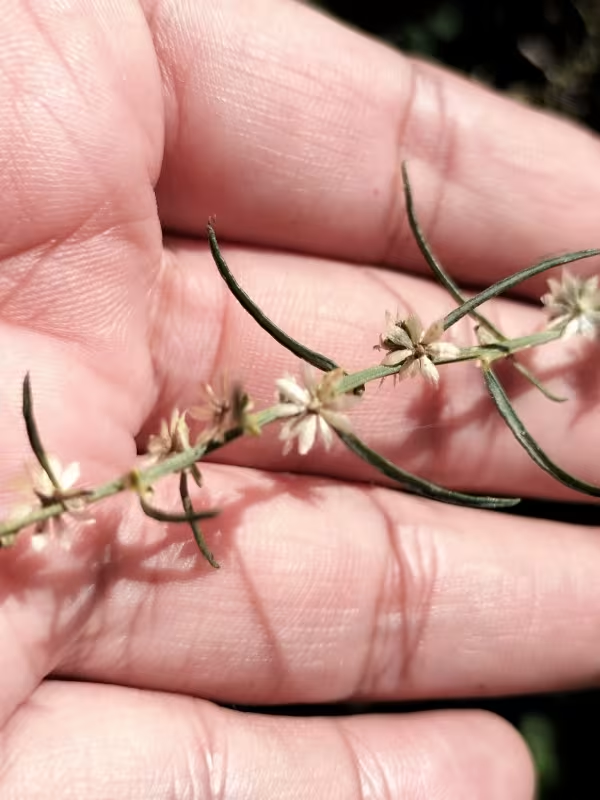
Description
Growing requirements
Burrobrush, scientifically known as Hymenoclea monogyra, is a perennial shrub belonging to the Asteraceae family. It is a resilient species specifically evolved to survive in some of the most arid environments in North America.
The plant is native to the Southwestern United States and Northern Mexico. It is most commonly found in dry washes, stream beds, and alluvial plains where it taps into deep moisture reserves, despite the lack of surface water.
Botanically, it is a rounded, multi-branched shrub with thin, thread-like leaves. This foliage structure is a classic adaptation to reduce surface area, thereby limiting water loss through evaporation during high-heat conditions.
In terms of soil and climate, it thrives in sandy, gravely, or rocky substrates. It requires full sunlight to flourish and is highly tolerant of saline conditions, which makes it an ideal candidate for reclamation projects in harsh landscapes.
The main agricultural use for Burrobrush is not as a food crop, but as a crucial tool for environmental management. Its root system is exceptionally effective at stabilizing loose sand, making it invaluable for preventing soil erosion.
Main diseases and pests
Hymenoclea monogyra is highly sensitive to waterlogging. While it can survive significant droughts, it rarely thrives in areas with poor drainage or where the root zone remains consistently saturated, which encourages fungal decay.
Regarding pests, while it is generally robust, various desert insects may feed on its leaves and stems during peak growth periods. However, these interactions are usually considered part of the natural desert ecosystem rather than a threat to cultivation.