
Hymenachne pseudointerrupta
Hymenachne pseudointerrupta
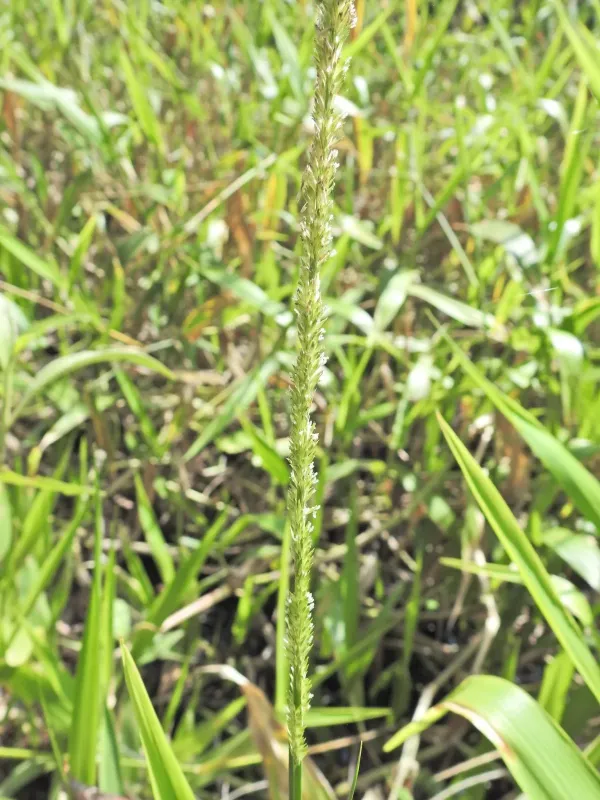
Description
Sowing dates
Planting Hymenachne pseudointerrupta is typically initiated at the beginning of the wet season, ensuring that the water levels and soil moisture are sufficient to support rapid establishment.
The most common propagation technique is vegetative, using stem cuttings that are either pushed into soft, damp soil or placed in shallow water where they readily form roots at the nodes.
Site preparation involves clearing existing aggressive weeds to ensure that the newly planted cuttings have enough space and light to develop into a dense stand.
Spacing between plants should be adjusted based on the intended land use; for rapid ground cover, closer spacing is recommended to suppress competition from other species.
Early-stage growth requires stable temperatures and protection from extreme hydrological shifts to prevent the young plants from being washed away or buried under excessive sediment.
Growing requirements
Hymenachne pseudointerrupta is a robust perennial grass belonging to the Poaceae family, specifically adapted to survive and thrive in semi-aquatic habitats.
The crop requires constant water availability and is well-suited for floodplains, marshes, and the fringes of tropical rivers where the soil remains permanently saturated.
Ideal soil conditions consist of fertile alluvial deposits or heavy clays that can retain moisture and provide a stable base for the extensive root system of the plant.
Climate requirements are strictly tropical, as the plant demands significant sunlight and warm temperatures year-round to maintain high metabolic activity and rapid growth rates.
It displays remarkable resilience to fluctuating water levels, making it an ecological staple in environments where seasonal flooding is a regular occurrence.
Yield
The biomass productivity of this species is highly valued in tropical agriculture, as it provides a reliable source of green forage for livestock like cattle and buffalo.
Yield is heavily influenced by nutrient availability in the water and soil, with nitrogen-rich environments significantly boosting the production of lush vegetative material.
In well-managed systems, the grass provides continuous forage through multiple cuts or controlled grazing cycles, recovering quickly due to its aggressive growth habit.
Nutritionally, the forage quality remains high compared to other tropical wetland grasses, especially when harvested or grazed at an early vegetative stage.
Efficient management of the water level can optimize yield, as the plant responds positively to specific depths that allow for maximum expansion of the canopy.
Main diseases and pests
Pests such as lepidopteran larvae can cause significant foliage damage, potentially reducing the overall quality and volume of the harvestable green biomass.
Fungal diseases are a risk during prolonged periods of high humidity and stagnant water, which can lead to leaf spots and reduced plant vigor over time.
Competition from invasive aquatic plants can rapidly overtake a Hymenachne stand, particularly if the water quality changes to favor more opportunistic species.
Overgrazing poses a major threat to long-term productivity, as it exhausts the plant's carbohydrate reserves and prevents effective regrowth of the stem nodes.
Pollution or high levels of chemical run-off into the habitat can negatively impact root health, eventually leading to patchiness and total decline of the stand.
Harvesting
Harvesting is primarily managed through controlled grazing, which allows the cattle to selectively consume the most nutritious portions of the grass in its natural habitat.
For mechanical harvesting, specialized amphibious machinery or shallow-draft boats are required to access the plants without damaging the underlying soil structure.
Timing the harvest is critical; the plants should be cut or grazed when the stalks are succulent and high in protein, avoiding the more fibrous, woody phases of maturity.
Maintaining a minimum stubble height is essential to preserve the nodes necessary for rapid regeneration, ensuring that the next cycle of growth begins immediately.
Sustainable harvest planning involves rotational grazing to allow for periods of recovery, which is vital for maintaining the density and health of the grass population.