
Hydrostachys verruculosa
Hydrostachys verruculosa
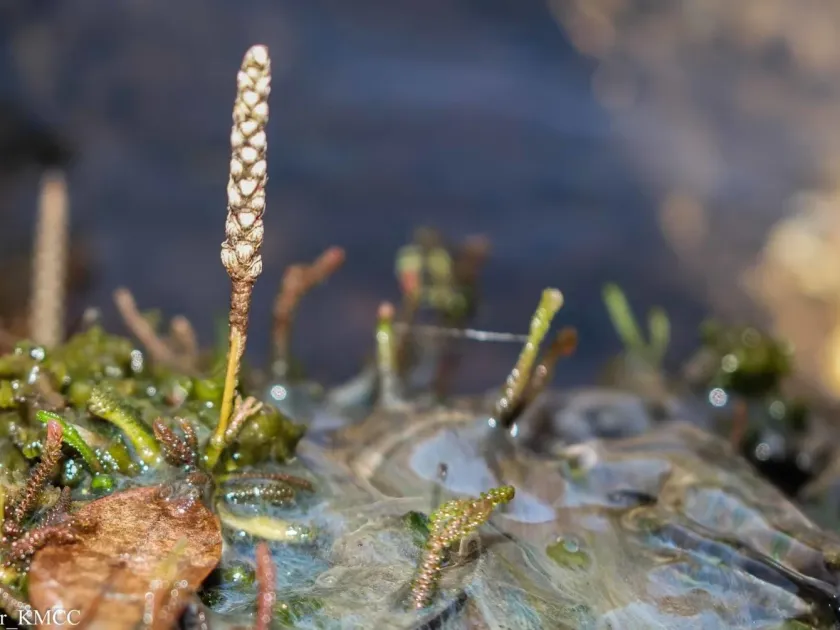
Description
Growing requirements
Hydrostachys verruculosa is a fascinating botanical species belonging to the family Hydrostachyaceae. It is a highly specialized rheophyte, meaning it is an aquatic plant that evolved to live in fast-flowing water, typically anchoring itself to submerged rocks.
The origin of this species is traced to the tropical regions of Africa and Madagascar. Its native habitat is characterized by turbulent river rapids and waterfalls, where it thrives in conditions that would be unsuitable for most other aquatic vegetation.
Botanically, Hydrostachys verruculosa is distinguished by its leathery, often wart-like foliage (hence the epithet verruculosa). The plant lacks true roots as defined in terrestrial plants, instead utilizing rhizoid-like structures to grip rock surfaces firmly.
The climate requirements involve constant temperature ranges associated with tropical river systems. The water temperature must remain relatively stable, and the plant requires high levels of dissolved oxygen to support its intensive metabolic processes.
In terms of substrate, it does not require soil or sediment. Instead, it derives essential nutrients directly from the water column. Consequently, the water must be rich in dissolved minerals, necessitating a natural, unpolluted flow for optimal health.
Main diseases and pests
The primary threats to Hydrostachys verruculosa are human-induced alterations to river ecosystems. Dam construction and the resulting changes in water velocity create conditions that prevent the plant from successfully anchoring.
Chemical runoff from agricultural areas is a significant danger. Increased nutrient levels in the water lead to excessive algal blooms, which compete for light and physical space, ultimately suffocating the slow-growing colonies.
The species is also vulnerable to localized extinction due to the fragmentation of its habitat. Once a specific rock bed is disrupted or silted over, the plants cannot easily migrate to new, more favorable locations.
While no major agricultural pests target this plant, generalist aquatic pathogens can compromise its health during periods of environmental stress. The weakening of the host tissue makes it susceptible to fungal decay.
Global warming trends threaten the species by reducing the base flow of river systems. When water levels drop significantly, the plant is exposed to air, leading to rapid desiccation and the irreversible loss of vegetative tissue.