
Hydrophylax maritima
Hydrophylax maritima
Description
Growing requirements
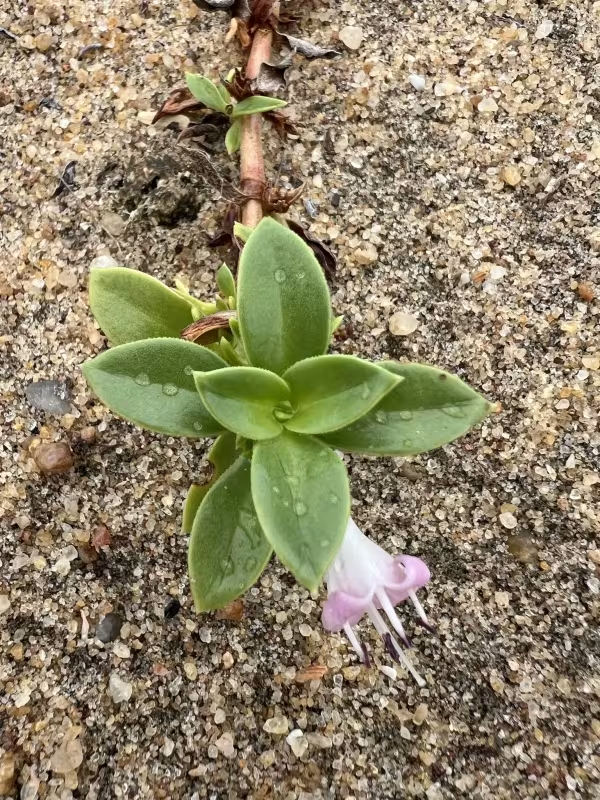
Hydrophylax maritima is a perennial, prostrate herb belonging to the Rubiaceae family. It is recognized primarily as an important coastal halophyte, specifically adapted to sandy substrates and shoreline environments.
The plant thrives in full sun exposure and requires well-drained, sandy soils. It is naturally resistant to high salinity levels and is specifically adapted to withstand the harsh conditions of coastal zones, including intense wind and salt spray.
Botanically, it features succulent leaves and creeping stems that root at the nodes. This structural adaptation allows it to colonize expansive areas rapidly, making it an excellent candidate for ground cover in sandy coastal regions.
Temperature requirements are generally tropical or subtropical. It does not tolerate freezing temperatures, as it has evolved to maintain active metabolic processes in warm environments with high light intensity.
Regarding soil management, it does not require fertile soil but benefits from high aeration. Its deep root system helps in stabilizing volatile substrates, which is a critical factor for successful establishment in dune areas.
Yield
The yield of Hydrophylax maritima is measured by its biomass coverage efficiency. In agro-ecological projects, the primary goal is achieving complete ground cover to prevent wind-driven erosion of beach sands.
Production rates can be significantly improved through the strategic application of trace minerals and light nitrogen supplementation, which encourages the development of dense mat-like foliage.
Beyond its ecological utility, there is interest in its biochemical profile. Certain studies suggest that the plant possesses bioactive properties suitable for potential use in natural product industries.
The longevity of the plant and its ability to spread vegetatively provide a sustainable yield of protective cover. Once established, it requires minimal human intervention, making it a low-cost solution for environmental management.
Harvesting for commercial applications must be managed carefully to ensure the root systems are not destroyed, as the plant acts as a permanent anchor for the coastal soil surface.
Main diseases and pests
While robust in its native habitat, Hydrophylax maritima is susceptible to excessive fungal pathogens in conditions of high humidity combined with poor airflow.
Pest pressure is relatively low due to the plant's saline tissues, but it can be affected by specific leaf-eating beetles that have adapted to halophytic flora in certain geographic regions.
Invasive weed species can outcompete young seedlings in the establishment phase. Therefore, intensive weeding is required during the first few months until the plant forms a closed canopy.
Excessive trampling by human activity or grazing animals can cause mechanical damage, breaking the creeping stems and exposing the root zone to extreme desiccation.
Chemical contamination of coastal areas, including oil spills or industrial waste, poses the most severe threat to the population, as the plant directly absorbs substances through its root system.